Monday, June 28, 2010
Journeys
I will be traveling much of the next three weeks, so posting will probably be light to non-existent. Happy Independence Day!

Wednesday, June 23, 2010
Robert Pinsky and the Muse of Psychiatry
Robert Pinsky's fascinating "Essay on Psychiatrists," which surely must be by far the longest published poem in the history of the world that is devoted to shrinks, once inspired me to write a much less felicitous essay of my own. I was surprised to discover today that, well, both "essays"--one a must-read, the other not so much--are fully available online.
This is Pinsky's conclusion (section 21. 21!):
Essaying to distinguish these men and women,
Who try to give medicine for misery,
From the rest of us, I find I have failed
To discover what essential statement could be made
About psychiatrists that would not apply
To all human beings, or what statement
About all human beings would not apply
Equally to psychiatrists. They, too,
Consult psychiatrists. They try tentatively
To understand, to find healing speech. They work
For truth and for money. They are contingent...
They talk and talk...they are, in the words
Of a lute-player I met once who despised them,
"Into machines"...all true of all, so that it seems
That "psychiatrist" is a synonym for "human being."
Even in their prosperity which is perhaps
Like their contingency merely more vivid than that
Of lutanists, opticians, poets--all into
Truth, into music, into yearning, suffering,
Into elegant machines and luxuries, with caroling
And kisses, with soft rich cloth and polished
Substances, with cash, tennis and fine electronics,
Liberty of lush and reverend places--goods
And money in their contingency and spiritual
Grace evoke the way we are all psychiatrists
All fumbling at so many millions of miles
Per minute and so many dollars per hour
Through the exploding or collapsing spaces
Between stars, saying what we can.
This was published in 1975, but not so much has changed, really. One can't expect him to get everything right...Even lutanists had the temerity to despise us? What would guitarists do, crush us like bugs? What "prosperity?" Okay, maybe more prosperous than contemptuous lutanists and snarky poets, but opticians may be a close call...Not really into caroling (is anyone?)...
One of my observations back then was the back-handed compliment at the heart of the poem. Message: psychiatrists are just like the rest of us, no worse, no better. Therefore don't hate them, but why pay to see them really? I've got kids to feed...
This is Pinsky's conclusion (section 21. 21!):
Essaying to distinguish these men and women,
Who try to give medicine for misery,
From the rest of us, I find I have failed
To discover what essential statement could be made
About psychiatrists that would not apply
To all human beings, or what statement
About all human beings would not apply
Equally to psychiatrists. They, too,
Consult psychiatrists. They try tentatively
To understand, to find healing speech. They work
For truth and for money. They are contingent...
They talk and talk...they are, in the words
Of a lute-player I met once who despised them,
"Into machines"...all true of all, so that it seems
That "psychiatrist" is a synonym for "human being."
Even in their prosperity which is perhaps
Like their contingency merely more vivid than that
Of lutanists, opticians, poets--all into
Truth, into music, into yearning, suffering,
Into elegant machines and luxuries, with caroling
And kisses, with soft rich cloth and polished
Substances, with cash, tennis and fine electronics,
Liberty of lush and reverend places--goods
And money in their contingency and spiritual
Grace evoke the way we are all psychiatrists
All fumbling at so many millions of miles
Per minute and so many dollars per hour
Through the exploding or collapsing spaces
Between stars, saying what we can.
This was published in 1975, but not so much has changed, really. One can't expect him to get everything right...Even lutanists had the temerity to despise us? What would guitarists do, crush us like bugs? What "prosperity?" Okay, maybe more prosperous than contemptuous lutanists and snarky poets, but opticians may be a close call...Not really into caroling (is anyone?)...
One of my observations back then was the back-handed compliment at the heart of the poem. Message: psychiatrists are just like the rest of us, no worse, no better. Therefore don't hate them, but why pay to see them really? I've got kids to feed...
Tuesday, June 22, 2010
Fool Me Once...

"Sir, I have found you an argument; but I am not obliged to find you an understanding."
Samuel Johnson
"Be wise with speed;
A fool at forty is a fool indeed."
Edward Young
A few brief reflections today:
1. Errol Morris has begun an interesting series on anosognosia, which is a lack of knowledge of a deficit or disability (in psychiatry we speak of "lack of insight," or lack of awareness that one has a mental illness). It pertains to a number of specialized neurological syndromes (which may include certain varieties of hysteria), but in a far broader sense it seems to me that it pertains to foolhardiness--the fool is precisely he who is smugly confident that he has all the relevant information or skills that he needs, when he doesn't. Folly is the self-assured ignorance of one's own ignorance. Conversely, an ignorant person could be considered wise if he is aware of his ignorance (the first lesson of Socrates). All organisms have imperfect knowledge and therefore may be considered ignorant, but only human beings can be foolish or wise. This must finally be neurobiological, but with an inescapable moral component.
2. According to a review, in his biography of Marcus Aurelius, Frank McLynn considers the Roman emperor's stoic philosophy monstrous and inhuman inasmuch as it prizes individual virtue and peace of mind over vulnerable care for the external world. I have often thought the same about the Zen attitude of non-attachment, but it occurs to me that these philosophies are meant to be bracing tonics, not to be imbibed in excess. It is said that the only difference between a medicine and a poison is the dose; the same could be said of ideologies.
3. The latest entry in the New York Times's delightful philosophy blog looks at existentialism's subject/object distinction in the context of the pop phenomenon that is Lady Gaga. The point seems to be that Ms. Gaga (?) embraces the objectification of the female form, exaggerates it to an absurd degree, and then flaunts it like a weapon, exulting in her power. Arguably this has gone on for millenia, but never apparently with such gusto or in such over-exposed fashion. Inasmuch as one consciously and authentically objectifies oneself, one also operates more deeply as a controlling subject, but at the price of becoming more broadly an object. It is the plastic surgery conundrum again--does one ultimately do it for oneself or for others? Both, of course, but in each individual case--and presumably cumulatively as well--one effect must prevail.
4. One can run a psychiatric clinic without benzodiazepines or stimulants just as one can run a pain clinic without opiates or an office without air conditioning. That is, one can--human beings lived without these things for most of history and continue to do so in much of the world--but for better or worse this is what we call civilization.
5. I am always warily curious about the patient who was dissatisfied with his last doctor, and not because there aren't plenty of lame doctors around. But when I hear "All he wanted to do was dope me up on medicines," I am tempted to reply, "Sort of like you're trying to get me to do now?" and when I hear "He kept changing my medicine every month," I think, "Sort of like you'll ask me to do next visit?"
Monday, June 21, 2010
Fathering
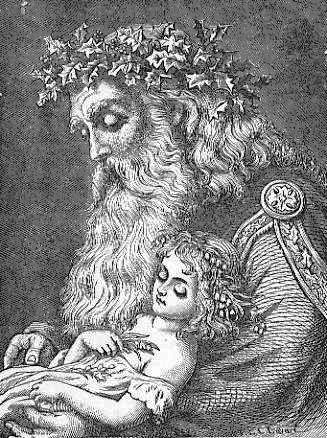
"It is a wise father that knows his own child."
The Merchant of Venice
In sharing Toy Story 3 with a packed house of the next generation yesterday, it occurred to me that the toys are fundamentally parental figures, not stand-ins for kids, even if they act in a playfully juvenile fashion (as parents are sometimes wont to do). My memory of the first two movies is vague, but I don't recall the biological father of Andy, the boy whose toys these are, playing much of a role. It is Woody who is his father figure, with Buzz and the rest acting as kind of extended family. They belong to Andy, yes, but in the sense of needing to be there for him. It is interesting, and a bit sexist perhaps, that none of the toys occupies a maternal role (although yes, Andy does have an actual mother, and Mrs. Potato Head is grandmotherly I suppose).
The movie is sad because Andy is moving on to college, and outgrowing his toys the way children outgrow their parents, i.e. significantly but not totally. The toys are ageless in the way that adult parents are ageless; between the ages of, say, 30 and 60, adults--and parents--usually don't change dramatically, especially in their children's eyes. Of course, the toys' declared rationale is that Andy needs them, and they are reluctant or unable to acknowledge their need for him, or their need for his need of them. The toys worry that they are obsolete and over the hill--obviously this is a concern of parents, not children.
In recent evolutionary posts I have implied the way in which human beings come to life possessed of an incredible inertia, and yet in our contemporary cultural folly, this is often assumed to be an inertia of stasis, when nothing could be further from the truth. In fact, human beings come into existence embodying an immanent inertia of developmental momentum built up over several billion years. Children are less lumps of clay awaiting molding than they are rushing rivers capable of both cleansing and bowling over anyone in their path.
Much talk of the decline of parenting seems to be in the air; fertility rates are declining most places (although not quickly enough to quell concerns of population-related environmental catastrophe)--the childless seem more numerous than ever before in human history. And studies suggest that parenting doesn't make people happy, quite the opposite. Courtesy of Arts and Letters Daily, Bryan Caplan suggests that parents bring their distress upon themselves in an illusory faith in their own ability to shape their offspring. Basically, our self-imposed pressure is unreasonably high. Numerous studies show that absent frank abuse or deprivation, children grow up to be some permutation of their parents, but not because of specific parenting practices (reading habits, family dinners, curfews, schools, etc.), which don't matter much in the long run, but because they bear their parents' genes. For evolution, propagation is too crucial to entrust to local and contingent parenting practices.
Examining studies purporting to demonstrate the unhappiness of parents, Sonja Lyubomirsky, considers several alternatives. One is that children endow a life with meaning in a way that ultimately matters far more than transient states of satisfaction captured by happiness surveys. Another is the possibility, similar to Caplan's, that parenting is far more difficult and anxiety-provoking now than it has been for most parents in human history. While in most pre-modern cultures parenting was shared by extended family (or indeed "a village"), now it is undertaken primarily by the nuclear family, or all too often, by the single parent. Added to this is the unreasonable sense of parental responsibility for outcomes. I would mention also that today's pace of cultural change generates anxiety; for most of history parents could justifiably assume that their children and grandchildren would inhabit a world very similar to theirs--I can't begin to imagine what sort of world could await my grandchildren.
I am not so cynical as to maintain that most people have children out of a narcissistic urge. Human beings know, of course, that they are not living on through their descendants; rather, they seek to perpetuate values and ways of life that are dear to them--children are votes cast for the future of humanity. I seek to share nature or the arts with my kids not because such things will "improve" them (whatever that means), but because I want them to love what I deem worthy of love, and because I want them to help further a world in which such things have value. There are, of course, other ways to cast votes for the future, through teaching, good works, etc. For better or worse, most human beings crave the materiality of grandchildren.
Sunday, June 20, 2010
Explanation and Intervention

"Nature conceals her secrets because she is sublime, not because she is a trickster."
Albert Einstein
In considering causation in his conclusion to The Evolution of Childhood, Melvin Konner writes:
When asked why a teenage boy punches another, we can say that he does so because of:
- the secretion of a neurotransmitter in the amygdala
- in a neural circuit primed by testosterone,
- in response to a verbal insult,
- after a lifetime of frustration and observation of violence,
- given a fetal brain hurt by alcohol,
- and shaped by prenatal androgenization,
- against a background of maleness and individual aggressiveness,
- caused by natural selection favoring male status and self-defense,
- on a phylogenetic foundation of reproductive competition.
None of these explanations contradicts any of the others; in fact, we do not have an explanation until we have all nine levels.
This is an impressive illustration of over-determination, and an integrative understanding of a seemingly simple act. There is the full spectrum from molecular biology to cultural narrative; if a discrete behavior is this complex, how can we hope to answer the question, "Doctor, why am I depressed?" However, because we must be pragmatic creatures, we can't just throw up our hands; we must decide which cause(s) will be most significant for us in terms of possible intervention. However, we may not have sufficient information for such decisions for a few lifetimes yet. Discussing the biochemistry of development, Konner goes on to write:
Now all we have to do is spend a couple of centuries working out the cascade. We will need a very big piece of paper--it won't fit on a laptop screen--but we will eventually draw it, and it will explain everything. Up to a point. Beyond that, there is chance, chaos, and countless outside influences, especially in the flexible realm of behavior. These may make our elegant diagram look like a Jackson Pollock painting. Still, these outside influences are partly lawful, just as Pollock's drips and splatters, a mess to the untrained eye, are strangely ordered and intentional in their provenance. These external forces, like the cascade itself, are powerful, and understanding them better will give us a certain measure of control.
Nevertheless, we now know that it is foremost the cascade that builds brain and behavior, not just in the embryo but throughout development and life; the cascade proposes, the environment disposes. The cascade is the key creative element in the story. So we behavioral scientists might now show our respect for it--and break decisively with a century of disdain--by enunciating a law of psychogenetic inertia: developmental plans in motion will stay in motion according to predetermined guidance unless diverted by outside forces. It is perhaps just another way of saying canalization, and it is hardly as elegant as Newton's first law, but it may serve to remind us that all creatures, children included, come into the world with a plan.
A new human being is like a cupful of water dipped from the Amazon--we may straighten its course here and there, or dredge its bottom, or purify its waters but there is no need for chlorine or a canal.
Saturday, June 19, 2010
Heavenly Buddies
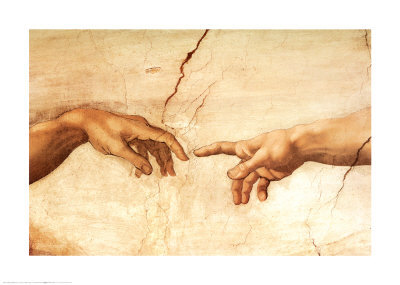
"I don't know how to love Him."
Jesus Christ Superstar
"In the end, however naked, tall, there is still
The impossible possible philosophers' man,
The man who has had the time to think enough,
The central man, the human globe, responsive
As a mirror with a voice, the man of glass,
Who in a million diamonds sums us up."
Wallace Stevens, "Asides on the Oboe"
In my current reading (Melvin Konner's The Evolution of Childhood) I came across the sentence, "Religion is largely about relationship" (p. 671). Initially this took me aback as an extraordinary claim (isn't religion also about history, narrative meaning, social tradition, and morality?), but I realized it wasn't, for a couple of reasons. For one, I had implicitly but mistakenly read it in the impoverished sense in which "relationship" is used in contemporary popular culture.
Perhaps this was because in a local show last night the great Iris DeMent, chatting between songs, talked about her 92-year-old mother, who, after watching Oprah on relationships, said something like, "I'm not sure I even know what a 'relationship' means" (she had been married for 50-odd years and borne 14 children). In common parlance "relationship" is inextricably and often trivially tied to romance and dating, generally in the sense of novelty and excitement. In a couple of paragraphs I'll speculate on why that might be.
But Konner was merely stating the obvious in this case in the sense, which I've written about before, that religion is primarily about emotional needs, not metaphysical conviction. God serves vital interpersonal functions on two levels, providing both an idealized, all-accepting Other as well as a real and connected community of believers focused on that Other. While religion obviously is diverse, even a supposedly atheistic "faith" like Buddhism generated over the millenia a massive emphasis upon the figure of Buddha himself, arguably a God-substitute. While a tiny minority of "believers" may view God from an abstract perspective, for the vast majority of believers, religion is intensely personal. In a world of inevitably imperfect relationships (whether with parents, childrens, friends, or lovers), God is infinitely supporting and reliable. In psychoanalytic terms, as many have written, God is a superb "selfobject," the ideal that can also be related to (witness Christ as both God and human).
If the essence of religion is emotional and relational--if we may view it as a boat (an ark?) sheltering people on a threatening sea--it nevertheless requires a metaphysical anchor, that is, the being who is this idealized Other must be held to actually exist. Otherwise the whole enterprise is for naught. And it is this anchor, philosophically very shaky indeed, that has been the focus of most critics of religion over the millenia. But for most believers the intuition of the presence of this perfect Other is so obvious, so strong, so overpowering that it is impervious to argument. One may as well try to convince someone that he is not, in fact, in love with his beloved (perhaps Iago, one of the most despicable characters in all of literature, did pull this off with Othello, but it didn't turn out very well).
If religion were as universal among human beings as, say, language or sexual drive, then that would be end of story (Homo religiosus?). But while the great majority of human beings who have ever lived have been religious in some way, shape, or form despite arguably devastating philosophical objections to belief, it is of course the case that a minority of individuals, both now and throughout history, have been either implicit (i.e. agnostic) or explicit atheists. How do they manage relationships without the perfect partner who is God? Would a therapist in Scandinavia care to comment here?
To get back to Oprah, I wonder if "relationships" are so much the talk of the popular airwaves for the very reason that relationships are harder to maintain than ever. Not only religion, but the family and community have grown progressively more fragmented over the past century or two. Among other things, people turn on Oprah (another selfobject) as they might go to church. The anchor is loose, so the pressure to locate, attract, and keep (!) the "soul-mate" increases. When the Bible palls, family is distant, and the suburban street is empty, there is always eHarmony (or for Wallace Stevens, the poetic ideal). While neo-atheists such as Christopher Hitchens or Richard Dawkins are smugly confident, Nietzsche saw the death of God (as opposed to the Church, a very different animal) as undeniable and inevitable, but also as an immense tragedy for humanity, a tragedy past which we are still trying to feel our way.
Thursday, June 17, 2010
Fun with Innuendo

"Even paranoids have real enemies."
Delmore Schwartz (?)
A local Republican candidate for congress has suggested that the gulf oil spill may have been a government plot. He does not claim outright that this is the case--indeed he admits that no facts support his speculation--but he has decided to add the possibility to the national discourse on the matter.
In the same spirit, I would like to take the opportunity, here, to raise the possibility that, as many have suspected, the moon is in fact made of green cheese. Granted, there are no facts supporting this claim (indeed, there may be so-called "facts" contradicting this claim, according to the liberal media), but I have long suspected that, well, the earth's lone satellite is not all that it would appear to be. Open discourse in this country necessitates free debate as regards the composition of the moon, as with all matters, and I hope that this proposal will not provoke any attempts to shut down my First Amendments rights in launching the discussion. In fact, the Obama administration may have found the oil spill to be a useful diversion from the true state of the heavens.
I find it very interesting that the oil spill occurred in the Gulf of Mexico and not next to Obama's home state of Hawaii. Wait, he wasn't born in Hawaii, was he? Well, he vacations there at any rate, and doesn't want oiled beaches on vacation. There are no oil rigs off of Hawaii? No matter. I haven't heard of any oil spills off of Kenya either.
Subscribe to:
Posts (Atom)