Happy birthday, Bob.
Alex Ross posted some favorite lines.
There is something about Dylan--the musician, the poet, the cryptic cultural figure-- that is gratuitously compelling. If grace were to exist, it would feel something like listening to Dylan, to that "thin wild mercury sound" of 45 years ago.
It seems miraculous that he is still alive, both literally and figuratively.
Favorite line? At random:
"Well, the comic book and me, just us, we caught the bus"
Showing posts with label Music. Show all posts
Showing posts with label Music. Show all posts
Tuesday, May 24, 2011

Sunday, June 13, 2010
A Troubled Mind

Twenty years before Kurt Cobain's suicide rocked the music world, the self-inflicted demise of another musician was relatively little noticed. Nick Drake (1948-1974) was an English folk singer and guitarist who released three transcendent records to minimal or no acclaim before dying from an overdose of amitriptyline. He was a perfect Romantic artist, the tormented genius who was too ill-suited to the world to survive, the kind of person who is at once evolution's greatest product and its greatest failure.
It sounds like Drake, reserved and anxious from an early age, grew frankly socially phobic, interpersonally avoidant, and depressed as his short life wore on. Pathologically shy and distant even among family and friends, he obviously sought escape in music and marijuana. His first album Five Leaves Left, produced when he was only 20, was a staggering achievement for a novice. But one of the reasons it failed commercially was his inability or unwillingness to promote the record through touring and interviewing; he knew how good his work was and thought it should speak for itself. Big mistake, at least if one wants to be recognized. And presumably Drake did wish this; largely unable to connect in other ways, he sought to connect through music. When he found his overtures largely ignored by the public of his time, it was a devastating rejection. Ironically, of course, his albums are now commonly honored as among the best of the last century.
Drake's voice is hypnotic in its effect, both dark and delicate, both detached and intimate. His musical world is one of ethereal melancholy. As with Sylvia Plath and some others, it is tempting to experience his work through the prism of his eventual fate--how is it possible to experience such beauty and such sadness at the same time? The first song on his first record, "Time Has Told Me" (which can be heard here), is Drake at his best, a clarion call but at a frequency many cannot hear.
Tuesday, May 12, 2009
Dylan at 68
"The world of research has gone berzerk,
Too much paperwork."
"Nettie Moore"
"She's sixty-eight but she says she's fifty-four."
"Maggie's Farm"
Every now and then I like to prune my readership here (an undertaking that might seem superfluous) by offering a comment on popular music. My last foray in this direction was insufficiently appreciated, but I was not deterred.
I obtained my Dylan tickets for July, as the grand master of blasted bluesy Americana does another summer tour of minor league ball parks. I have also enjoyed a few listens to his new, 33rd studio album, Together Through Life, which I found to be a refreshingly light-hearted effort. Particularly over his last few records, he has alternated between the grimly resigned (Time Out of Mind and Modern Times, whose last track, "Ain't Talkin'," was a virtual dirge) and the wittily whimsical (Love and Theft and now Together Through Life).
Dylan turns 68 this month, but he sings like he's 168. I wish some throat specialist could explain to me how his voice now and his voice from forty years ago could belong to the same human being. He croaks along like a veteran not of lysergic acid diethylamide, but of sulfuric acid, steadily sipped over the years. If a corpse could sing, this is what it would sound like--but this is precisely what makes the late Dylan so wondrous. To paraphrase Samuel Johnson when he spoke of a dog walking on its hind legs, one is less inclined to criticize the performance than to marvel that it is done at all. By all rights Dylan should be dead, with Presley, Morrison, and Cobain, but instead he persists in his globe-roaming neverending tour.
Doesn't Dylan belong to a quartet of titans bestriding the past century of American popular music, with Bing Crosby, Sinatra, and Elvis? Going back to listen to his 60's records, from The Freewheelin' Bob Dylan to John Wesley Harding, plus a few prodigious 70's aftershocks like Blood on the Tracks and Desire, is to hear a genius at white heat, a supernova of words, images, and sounds. Back then he sang thinly and nasally, to be sure, but with boundless conviction and joyous plenitude. Over the decades he has proven transcendent also in his recurrent self-creation and dour inscrutability. By now he has generated so many personae and so many grotesque and surrealistic scenarios that there is no definitive Dylan for the public to pin to the wall, just a whirl of virtually compulsive invention. "He not busy being born is busy dying."
Together Through Life is generally propulsive and insouciant, the buoyancy of songs like "If You Ever Go to Houston" contrasting as always with Dylan's ancient articulation. "If you see her sister Judy/Tell her I'm sorry I'm not there" echoes the Dylan ethos pretty well: not there, or now you see me, now you don't. But there is, as ever, darkness, the ravaged "Forgetful Heart" opening with the discouraging (and redundant) reminder of human fallibility "Forgetful heart/ Lost your power of recall."
The record ends with Dylan's drily hilarious send-up of the odiously smug phrase "It's All Good." "Big politicians telling lies/Restaurant kitchen full of flies...but it's all good," he rasps, Dr. Pangloss wandering through Sodom and Gomorrah. This album, like all the haggard late Dylan, would be a moderate curiosity if created by John Doe, but authored by him, it is like some deep-space nebula, with an elegaic and crepuscular beauty most noteworthy for the violent creativity it commemorates.
If Dylan were good for nothing else, he inspired this exquisite homage from Cat Power.
Monday, January 26, 2009
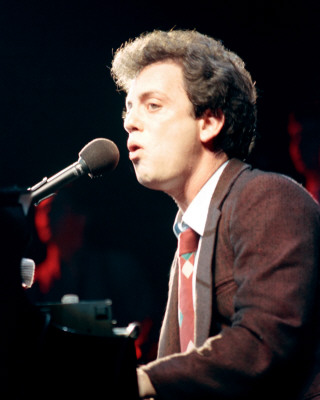
The Curious Case of William Joel
If music be the food of love, play on,
Give me excess of it; that surfeiting
The appetite may sicken, and so die.
Twelfth Night
High seriousness too shall pass. Like many others of my generation, I first came to know popular music in the form of Top 40, early 1980's material; I have spent the quarter century since trying to work through that aesthetic trauma. It took impressionable years merely to realize that there was much more in heaven and earth than such eminently ephemeral acts as Asia, Toto, and Tears for Fears. Shakespeare may be right in writing, above, that music can go from intoxicating to cloying in an instant, but all the same Ron Rosenbaum's dyspeptic diatribe against Billy Joel in Slate cannot go unanswered.
Why bash Peter Parker for not being Bruce Wayne, or Agatha Christie for not being Virginia Woolf? It is possible to enjoy high, middle, and low modes of music as with anything else. In my mind I tend to place Billy Joel on a soft-to-rugged continuum comprising Elton John and John Mellencamp; all three were distinctly middlebrow even in pop-musical terms, alternatively earnest and bombastic (as if bombasm (?) has no place in the arts). All three were derivative and impossible to take seriously, until one couldn't stop humming their irresistible, irrepressible tunes; the fact is that all three in their prime were inimitable composers of that contemptible genre, the pop song. They scampered amid the looming colossi of Dylan and the Beatles, but they couldn't help that.
From Piano Man in 1973 through An Innocent Man in 1983, Billy Joel generated a series of albums as good as any during that time; if that damns with faint praise, then so be it. To some degree, of course, he suffered from his own success--if Pink Floyd and Fleetwood Mac could be ruined through radio overplay, then how much more vulnerable would Joel's sometimes hothouse concoctions have to be? He could be saccharine (the execrable "Just the Way You Are" does not improve upon the hundredth hearing), and he could be crass (the, I suppose, forthright "Sometimes a Fantasy" from Glass Houses). He often came across as self-righteous and self-absorbed, but he was a pop star, for goodness sake.
Sure, some may find "Say Goodbye to Hollywood" more pompous than anthemic, but one could say the same of Dylan ("Idiot Wind") or Springsteen (pick any song). But Joel could flat out come up with tunes, and his voice was strong and pure. If one can find no affection for "Piano Man" or "Scenes from an Italian Restaurant," then one doesn't like Joel's genre, for he perfected it in such pieces. The chip on his shoulder could be off-putting, but his "Honesty" was refreshing at times.
I would rank Turnstiles, The Stranger, 52nd Street, and the superb live album Songs in the Attic at Joel's apogee, such as it is. By The Nylon Curtain the strain was starting to show ("Pressure" indeed), and An Innocent Man was a charming late spate of creativity that pretty much exhausted his musical ideas. Everything since has been unfortunate. Every now and then an artist, like Rossini and Salinger, lapses into long silence after extravagant shows of genius; they are outnumbered, alas, by the many who should follow their example but don't.
In my opinion music critics, logocentrists as they would have to be, tend to overemphasize lyrics of songs--their "message" or "statement"--far more than is warranted. Vocal music is not poetry that happens to have a tune; it is music first and foremost, and that's why we go to it. Similarly, the experience of opera is not primarily about plot. To be sure, the greatest operas have librettos that are of interest in their own right, but one needn't spend every moment with the greatest.
I am also convinced that musical affinity and aversion are intensely subjective; at times one is attracted or repelled by something for no rational reason. For instance, I tend to like introspective, countercultural female singer-songwriters; Joni Mitchell is reputed to be a great example; I should like her music. It does nothing for me. I could intellectualize about why that is, but I'm not sure it would have any wider validity.
This is not to say that criticism has no place in music. Musically and culturally, Joel is no Dylan, and Rosenbaum's article points out some reasons why. But on a more visceral level, for better or worse, he just doesn't "get" Joel's music; that's fine, but he needn't rain on the whole parade. Granted, my soft spot for Joel developed at a susceptible age; I rarely listen to him any more, and he wouldn't be on my desert-island ipod, but...one could do worse. The world would be poorer without Joel's music; in the grand scheme, not very much poorer, perhaps, but poorer nonetheless.
So: three cheers for Piano Man, right?
Sunday, December 7, 2008
The Year in Music

The man that hath no music in himself,
Nor is not moved with concord of sweet sounds,
Is fit for treasons, stratagems, and spoils.
The motions of his spirit are dull as night,
And his affections dark as Erebus.
Let no such man be trusted. Mark the music.
Lorenzo, The Merchant of Venice.
I am no musician, but I am an avid listener and I know what I like. If you couldn't care less, please feel free to stop reading now. What follows is outrageously opinionated, and for all I know could potentially offend many.
Overall I didn't find 2008 to be as remarkable a musical year as 2007, but maybe that was just me. Listed below are some records that I found to be notable, for better or worse; it is by no means comprehensive, as between work, family, blogging, and reading, I have time to sample only a fraction of even well-known releases. I may have overlooked some great ones and would like to hear about them if so.
To get relative disappointments (for me) out of the way, I found several of the year's heralded albums to fall a bit flat. R.E.M.'s Accelerate was competent and featured their signature sound in an ununusually focused and lively package, but overall they seem like a band that, ever since the prodigious Automatic for the People, just hasn't had that much more to say.
Two new and ballyhooed acts, Fleet Foxes and Vampire Weekend, seemed striking at first, but after a couple of listens they started to sound a bit twee and contrived. This was particularly the case with Vampire Weekend's quasi-African rhythms--this sort of thing was done a long time ago, and much better, by the likes of Peter Gabriel and Paul Simon.
Two interesting middling successes (I can't bring myself to call them failures) were My Morning Jacket's Evil Urges and The Raconteurs' Consolers of the Lonely. Evil Urges is one of those works that is highly proficient and eclectic but ultimately leaves me indifferent, and without a clear understanding of what the band is about. Perhaps it is possible to be too proficient and eclectic, when one goes out of one's way to leave one's showily ingenious mark on as many musical styles as possible within one album (is it really a good idea to try to impersonate both Prince and Wilco on the same record?). As for The Raconteurs, their album was vigorous and contains some tremendous riffs (with Jack White it could hardly be otherwise), but I found it to lack the endearing whimsicality of the White Stripes.
For me the most overlooked record of the year was Kathleen Edwards's Asking for Flowers. She combines a hauntingly wistful voice and a softer, more feminine Neil Young sound. Musically the record is a huge advance over her more work(wo)manlike first two efforts. There isn't a weak song on it, and she is one to watch.
January saw Cat Power's second album of covers, Jukebox. What is it with her and covers? Maybe she just prefers performing to songwriting. Well, with her voice it doesn't matter--she can sing nursery rhymes if she wants to. It is one of the great natural voices for both indie and blues, and owing to her well-documented history of emotional vicissitudes, I'd like to think that my profession may have played at least a miniscule part in keeping the voice singing. The one new tune, the Dylan homage "Song to Bobby," is spectacular, as is her remake of her own prior song "Metal Heart."
Portishead's Third was another tour de force for the somewhat lugubrious group. Plenty of bands are dark--last year's Boxer by The National, which everyone seemed to find stupendous, was dark, but in a droning sort of way that I found, even after multiple listenings, to be about as interesting as a cold drizzle. But Third is dark in a way that sounds variously magisterial and slightly deranged, if that possible; it is at once anxiogenic and uplifting. For me "The Rip" was one of the sublime songs of the year.
I can't make up my mind about Jenny Lewis's Acid Tongue. Like Evil Urges, it seems to suffer from a scattered eclecticism, but since it is her voice, it doesn't seem to bother me as much. The title song is Lewis at her absolute best, while "The Next Messiah" is ambitious if nothing else. Some of her songs are so sweet and direct (like some on Rilo Kiley's first record) that it can be hard to decide whether they are merely saccharine schlock, or whether they are so much so as to be actually subversive (in which case one can relish the beauty without guilt; as I think Nietzsche wrote somewhere, it is possible to be superficial out of profundity). She does make one think (among other things), and that is more than many pop musicians manage.
I'm not sure if I can get used to the "new" Lucinda Williams on Little Honey, which virtually all reviewers saw as a much sunnier work, for better or worse, than her usual. The voice and spunk are still there, but some of the pathos is missing ("My Little Honeybee," for all its energy, seems finally crass, although perhaps that is ageism on my part since I might give the ditty a pass in a performer two or three decades younger). Of course, there's no matching the successive heights of Car Wheels on a Gravel Road and Essence, where she had a kind of anguished gravitas.
Well, I could go on, but I am opined out. Please let me know what I overlooked, or which of my judgments is most egregiously mistaken.
Thursday, August 14, 2008
Talking Heads' Talking Cure
The great Talking Heads song "No Compassion" begins this way:
In a world
Where people have problems
In this world
Where decisions are a way of life
Other people's problems they overwhelm my mind
They say compassion is a virtue,
But I don't have the time.
There is a surely a tension--in medicine, in psychiatry, in this society--between an insistence on personal responsibility and accountability ("decisions are a way of life") on the one hand and the recognition of suffering and human weakness on the other. Do people truly and fully "decide" to be overweight, to be alcoholics, to smoke, to be depressed, or to "make poor choices" (that wonderful wastebasket phrase for people screwing up their lives for no clear reason we can ascertain), or does some corner of their brain, or even better, some pernicious aspect of their environment, essentially hijack the process and "decide" for them? I don't know the answers, of course, but I have long thought that the central art of medicine is seeking some balance between responsibility and compassion. At the end of a particularly bad day a later lyric might come to mind:
My interest level is dropping, my interest level is dropping
I've heard all I want to, I don't want to hear any more
In contrast somewhat to other specialties, the challenge of psychiatry is probably more emotional than intellectual and technical (we don't have procedures for the most part, and we don't have to worry so much about renal physiology, but compassionate acceptance of those with mental disorders, yes, that is not trivial).
Tuesday, August 5, 2008
Dylan as Medical Humanist
From Bob Dylan's "Open the Door, Homer"
"Take care of all your memories,"
Said my friend Mick
"For you cannot relive them
And remember when you're out there
Tryin' to heal the sick
That you must always
First forgive them."
The sick are sure to have committed at least one of two sins: either reminding us, the well (for now), of our own vulnerability or mortality; or having brought on or exacerbated their illness through their own action or inaction. This is true of mental illness above all, giving rise to the stigma we all know so well.
When Dylan finally gets his Nobel it will be for lyrics like this.
Subscribe to:
Posts (Atom)