"Psychology, which explains everything
explains nothing,
and we are still in doubt."
Marianne Moore, from "Marriage"
By "we" I don't mean we psychiatrists, at least not primarily, but rather "we the people." Caseness, or the determination of what counts as a mental disorder and what doesn't, is not something we go out and discover in nature; rather, it is a social category arrived at both explicitly and implicitly through cultural debate. The psychiatric profession obviously has opinions about caseness, but these do not go unanswered or unlimited by society at large.
In large part, antipsychiatry critique has been aimed at the extent of psychiatric diagnoses, both the numbers of diagnoses themselves (larger in every succeeding edition of DSM, we are reminded) and of course the numbers of people given those diagnoses. Suddenly it seems as if every other kid has ADHD and/or autism. Recently several psych blogs cited a recent survey claiming that 38% of a European sample suffers a mental disorder in a given year. This included substance abuse and dementia, but nonetheless it seems like a high number (the 5 or 10-year prevalence would be significantly higher).
I think that 38% seems like a high number for reasons both illegitimate and legitimate. Even now there is a tendency, more latent in some than others, to view those with mental disorders as the mad, an appalling but surely very minority group safely stowed away in institutions. The notion that "the mentally ill" walk the streets and even have jobs and families like you and I remains foreign to some. But there is also the real concern that the sick role, a transaction that officially relieves the patient of at least some social responsibility, loses its meaning when used too widely. In that respect, there is too little appreciation of the great variation in severity of mental disorders; just as one may go to an internist for a touch of gastritis or for cancer, a technical psychiatric diagnosis may or may not involve significant disability or the use of the sick role.
Whether medical or psychiatric, diagnosis when applied liberally enough approaches the condition of enhancement. For Freudians neurosis was an inescapable condition of humanity, so at certain times and places (and with sufficient economic resources) to be in analysis did not mark one as "sick" so much as self-aware and ambitious. Similarly, in those older than 85, significant dementia is closer to the rule than to the exception, so statistically speaking the effective treatment (which we don't yet have) of dementia in the very old would in fact qualify as enhancement. And for modern medicine, mortality itself has virtually become a disease (which as the Onion occasionally reminds us, retains its 100% prevalence despite our best efforts). When we seriously discuss mental disorders having a prevalence greater than 50%, we start to consider syndromes that are, in toto, to be expected of the human condition, at least at this place and time.
Enhancement may well be justified, depending on the circumstances. The question is always: is treating any given phenomenon clinically (that is, as a syndrome worthy of specific medical intervention) likely to be helpful (that is, to lead to better functional outcomes, in the case of those problems for which we really do have treatments, or to better understanding of ourselves and others, in the case of those problems that remain intractable)? Or would it be better to consider the issue as a social/moral/cultural/existential difficulty? That is really the question, and not one that neuroscience can shed any light on whatsoever. Biologically, all human capacities appear to exist on dimensional continua, and the point at which we indicate "pathology" or "caseness" is a social and interpretive outcome.
Showing posts with label Psychiatric Diagnosis. Show all posts
Showing posts with label Psychiatric Diagnosis. Show all posts
Wednesday, September 7, 2011

Sunday, October 10, 2010
Yellow Bile

Guildenstern: The king, sir --
Hamlet: Ay, sir, what of him?
Guildenstern: Is in his retirement marvelous distempered.
Hamlet: With drink, sir?
Guildenstern: No, sir, rather with choler.
After an email I sent about a mutual patient complaining of irritability, her wise therapist commented to me on how many more patients she had seen with anger issues in recent years. She wrote, "My belief is that we are witnessing a 'cultural disorder,' with skewed attachments, a sense of entitlement, a lack of accountability, and a crisis of conscience." I too have been surprised by how many patients present with not only dysphoria, but with barely contained annoyance over the conditions of their lives.
Considering how many patients present with symptomatic behaviors of rage episodes and "going off on people," anger per se is surprisingly uncommon as a cardinal diagnostic symptom in psychiatry. As always, it all depends on context. General irritability may characterize depression, mania, or ADHD. Men in particular seem to react with defensive rage when threatened by anxiety. Borderline, narcissistic, and antisocial personality disorders often involve an inability to modulate indignation and temper.
A Times article discusses the occurrence of bullying at ever early ages (think Kindergarten), attributed speculatively to controlling, snarky parents as well as a general media culture valorizing materialism and mean-spiritedness. After several decades of sociologists decrying the disconnectedness, narcissism and entitlement of up-and-coming generations, are we seeing the fruits in an increasingly thin-skinned populace, in both clinical and political terms? Is resentment mutually amplified by the man on the street, virtual and media alter egos, and the much vilified political establishment? Indignation and claims of victimization are everywhere and are thereby cheapened.
Tuesday, October 5, 2010
Is It Depression?

"When I use a word," Humpty Dumpty said in a rather scornful tone, "It means just what I choose it to mean--neither more nor less."
Lewis Carroll
I took the title of this post from a drug ad I saw today, a question that, contrary to its originator's intent, yields no clear answers. What kinds of answers does someone seeing a psychiatrist seek, and will she get them? (For complex and controversial reasons, it is epidemiologically more likely to be a she, although that leaves plenty of he's too).
Someone seeing a doctor for chest pain wants to know two main things: one, is this a potentially mortal threat, and two, what can be done for it? The cardiologist can resort to a number of physical exam findings and (more likely these days) tests to answer these questions. What is at issue is: what underlying biological process does the pain reflect?
The psychiatrist's function is not much like this. If presented with someone with depressive symptoms, it is true that there are occult medical syndromes (such as, say, hypothyroidism, vitamin B-12 deficiency, or pancreatic cancer) that could be responsible, but these etiologies are vastly outnumbered by idiopathic depressions. The patient may want to know: is this caused by a "chemical imbalance," or by relationship problems, or by a history of abuse? One may speculate or construct a narrative around this, but is impossible to know for sure.
So if a psychiatrist is usually unable to identify underlying pathophysiology, what can he/she provide? Context. A large part of psychiatry is the proper use of the sick role--people present with ambiguous symptoms that are often the target of stigma in the community at large, and the question is: am I merely weak, or am I losing my mind, or is something else going on? While the psychiatrist has limited appeal to diagnostic tests, he can call upon wide experience with persons exhibiting similar symptoms (for this reason, it is extraordinarily scary to be a neophyte in psychiatry, because one has neither firm science nor experience as backing, only clinical supervision).
The granting of the sick role and the understanding and compassion involved can be quite powerful. The psychiatrist "mans" the gateway of mental disorder, conveying seemingly contradictory messages: you are merely human and therefore vulnerable like the rest of us, and so not beyond the pale, yet to a greater or a lesser degree you are more impaired than the average person. Beyond this, there is really only management of symptoms, as I have written before, in the way that a pain specialist manages symptoms. This may take the form of dynamic understanding, or cognitive reframing, or medications, but none of these is directly treating a clear-cut disease process.
In other words, when someone presents saying "my chest hurts," the appropriate next questions are, "What is really wrong with me and how can it be fixed?" When someone presents with "I am depressed," she has usually diagnosed herself. There is a sense in which one cannot be mistaken about one's own depression any more than one may be mistaken about being in pain (subjectivity prevails here). The questions that follow are: "How does my experience compare with others you have encountered; is there hope for me; and how can this be managed?"
Monday, October 4, 2010
Mad Scientists at Work

"I have neither the scholar's melancholy, which is emulation; nor the musician's, which is fantastical; nor the courtier's, which is proud; nor the soldier's, which is ambitious; nor the lawyer's, which is politic; nor the lady's, which is nice; nor the lover's, which is all these: but it is a melancholy of mine own, compounded of many simples, extracted from many objects, and indeed the sundry contemplation of my travels, in which my often rumination wraps me in a most humorous sadness."
Jacques, As You Like It
Most psychiatrists can't go a week without hearing the "guinea pig" comment from a patient alarmed by the all-too apparent imprecision of the enterprise. Problem is, it would be bad enough if treatment were up in the air; the reality is that diagnosis itself is often in flux. Two links--Mitchell Newmark, M.D. at Shrink Rap and Joe Westermeyer, M.D. in the green journal--illustrate nicely the yawning gulf between theory and practice when it comes to the art of the shrink.
Patients (and insurance companies) often crave DSM-type diagnosis for the sake of clarity, but such categories often do not usefully guide treatment. Both psychotherapeutic and biological interventions, strangely, can be both more general and more idiosyncratic than by-the-book diagnoses would suggest. After all, many of the most basic psychotherapeutic stances--Rogerian acceptance and cognitive reframing just to name two--apply across numerous diagnoses. The same may be true of medications--"antidepressants" are used to treat not only depression, but multiple anxiety disorders as well as eating disorders.
In this sense, two seemingly contradictory propositions may be said to be true: every case of depression is alike, and no two cases of depression are alike. The former may as well be the case when it comes to biological treatment, or rather, it is merely the case that depression exists on a spectrum of severity which dictates the aggressiveness (but not the basic type) of intervention. But it is just as true that when it comes to the fine-tuned approach to the patient (including, but not limited to, formal psychotherapy), myriad developmental and personal variables guide treatment far more than DSM diagnosis. Another way of putting this is that despite decades of attempts to make the DSM more specific, individuals within a category (whether schizophrenia or borderline personality disorder) are still more different than they are similar.
I think of evaluation and treatment as situated among three axes: severity, symptoms, and idiosyncratic history. The most basic question is: how impaired is the individual, and what extremity of intervention is called for? The first issue, whether evaluation or treatment is required at all, has already been answered, by the patient or someone close to him/her, by the time the clinician is on the scene. The second issue is whether biological intervention is likely to be helpful. In select cases, the third issue is whether inpatient or residential treatment is indicated.
Individuals are driven to treatment by symptoms, and once it is decided, if it is decided, that biological intervention is appropriate, it is shaped by symptoms more than by diagnoses. Yes, there are a few major categories helpfully kept in mind--primary psychotic disorder, depression/anxiety, bipolarity, substance abuse, and ADHD (or other cognitive impairments)--but those suffice for general formulation so far as biological treatment is concerned. When it comes to general and psychotherapeutic approaches, the unique idiosyncrasy of the patient is the chief guide of treatment.
As Dr. Newmark points out in his post, psychiatry remains profoundly different from the rest of medicine, where diagnosis is everything, in this respect. If a patient presents with chest pain, it is supremely important to know whether it is due to a heart attack, aortic dissection, bronchitis, pulmonary embolus, gastroesophageal reflux, or costochondritis, because each of these calls for clearly distinct treatments. Psychiatry is not like that. Deciding whether a person's diagnosis is depression, bipolar disorder, or schizophrenia will suggest moderate differences in treatment, but the latter will derive more from specific symptoms and personal background. This goes to show that psychiatry remains far more art (or "art") than science. The research-powers that be have yet to persuade the practitioner otherwise.
Wednesday, September 22, 2010
The Solitary
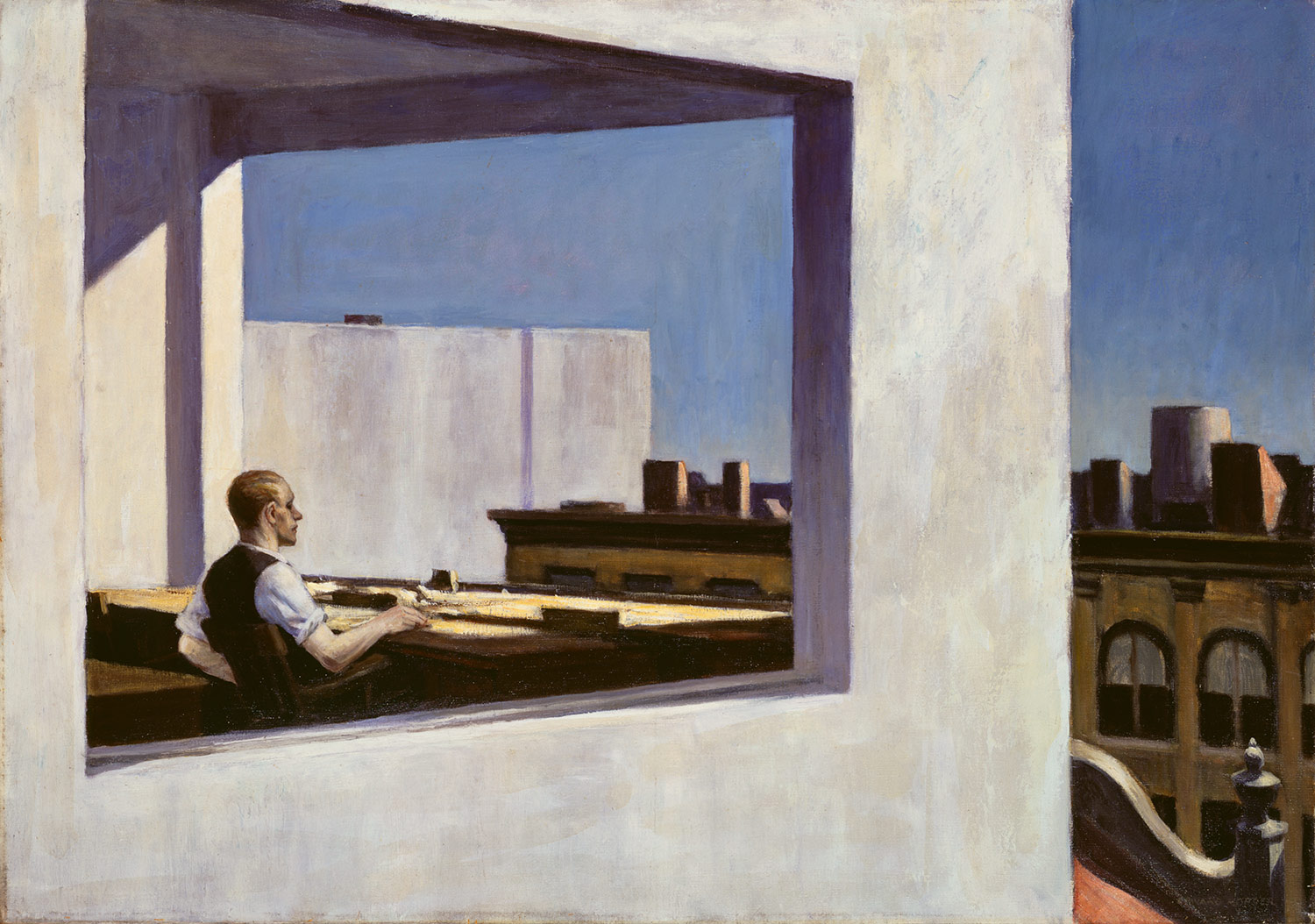
"In a soulmate we find not company but completed solitude."
Robert Brault
Briefly, The Atlantic features a story on Donald Triplett, the now 77-year-old who was the original child diagnosed with autism by Leo Kanner. After him, I suppose, le deluge.
One can only marvel at the complexities of this diagnosis, which rival those of schizophrenia. In both cases, is this a diagnosis unique to modern times? In contrast to mood disorders, which have demonstrably always been with us, it is difficult to find clear traces of schizophrenics and autistics in the historical record. Did they merely elude the spotlight of history, ekeing out obscure lives in remote farms or urban hovels? Or is some relatively recent pathogen, toxin, or environmental poison at work?
Does autism represent merely aberrant wiring, the vulnerability of a vastly complex process to contingent errors? On the face of it, autism (like schizophrenia) would seem likely to have caused a major fitness disadvantage to our ancestors (Donald in the article lacks not only offspring, but any history of girlfriends). Or does autism merely represent the severe form of gene associations that in milder forms may have generated unusual social respect in evolutionary times past? And as with ADHD, autism has no place to hide in hyper-social, hyper-competitive societies. Anxious suburban settings strive to emulate the more relaxed small-town acceptance and support enjoyed by Donald Triplett. One could also ask, inasmuch as he does not appear to be unhappy, whether he is "disordered" at all.
Wednesday, September 15, 2010
The Dragon's Hoard

"Man is hungry for beauty. There is a void."
Oscar Wilde (via review by Arthur Krystal)
I always thought of dragons, the greatest and darkest creatures of Faerie, chiefly as collectors and connoisseurs, not primarily as plunderers or marauders. Their treasures would be rich, strange, and obscure, gained as much by study and ingenuity as by brute force or fire. The trove under the mountain promised a hidden plenitude.
As I think more about Paul Bloom's How Pleasure Works, and his theory of the "life force" embodied in art works and artifacts, it occurs to me that this life force really consists of attachment, to a transcendent Other that is an artist or other cathected individual. The memento is a repository of attachment. If money is about power and freedom, collected items are about connection and the gravity of history.
In Plato's "Symposium" Socrates presents a theory of erotic love as a deficit state, as the craving of an inherently incomplete entity. Aristotle wrote that the solitary man is either a beast or a god (and I don't think he saw men as gods). No matter how we attempt to defend against it, need is the default state of humanity. This need is best satisfied by relationships, but even those with abundant relationships maintain a system of stored attachments in the form of memorabilia, whether in the form of photographs, letters, books, or other valued items.
Having a romantic connotation of the dragon's hoard from childhood, I found it jarring for a while to hear of hoarding as a hallmark of pathology. How indeed does one shape and prune one's network of keepsakes? This is a deeply personal art. Just as, per Samuel Johnson, one should keep one's friendships in constant repair, so should one maintain one's personal record of attachments.
This art is distinguished by discrimination. Just as we are dismayed by those who would cast away every book, photograph, and card, we are appalled by those who cast away nothing. Just as he who loves everyone arguably loves no one (in particular), so he who keeps everything has become blind to relative value. In the case of hoarding the "life force" has become clotted and stagnant; a natural need has defeated its own purpose. If Thoreau was right that one is wealthy in proportion to what one can do without, it is also the case that human beings are those animals in need of apparent superfluity.
Wednesday, August 18, 2010
Diagnosticism

Premodern umpire: "I call 'em as they are!"
Modern umpire: "I call 'em as I see 'em!"
Postmodern umpire: "They ain't nuthin' 'til I call 'em!"
(Attribution?)
In the current Psychiatric Times Ronald Pies, M.D. pooh-poohs the proposed diagnosis of "hypoactive sexual desire disorder" (I can't find an online link for it yet). I hold no brief for that particular problem (sounds like enhancement to me), but I found his article notable for his suggested approach--the "desert island test"--to defining mental disorder.
Specifically, Pies maintains that a disease is one which would cause both distress and incapacity with respect to even the kinds of basic survival functions needed for castaway solitude. Even apart from the objection that such isolation would provoke serious emotional problems in most people, it seems like an awfully restrictive model. For all mental disorders are exquisitely sensitive to stress and crucially contingent upon context, and for Homo sapiens, stress and context are primarily interpersonal. I can think of any number of severe schizophrenics, bipolar folks, and of course substance abusers who--again, if they could tolerate the loneliness--might function surprisingly well on a desert island.
Pies's model is an example of a common desire to clarify the bounds of psychiatric diagnosis by distinguishing endogenous from "merely" situational syndromes; the difficulty is that people cannot be fully understood apart from their situations. But it brings to mind the notion of mental disorder as one that impairs evolutionary fitness; this is an idea that aims to get at some primal ideal of (healthy) human nature, one free of all the dross of contemporary cultural pressures and expectations. Again, the problem is that human beings evolved as deeply social creatures, so the impact of social and cultural context is inextricable from human nature.
In an effort to dismiss mere cultural consensus as a source for psychiatric diagnosis, Allan Horwitz and Jerome Wakefield write in The Loss of Sadness: How Psychiatry Transformed Normal Sorrow Into Depressive Disorder:
Moreover, when concepts of disorder are equated with whatever conditions are called disorders in a particular group, the possibility of scientifically evaluating and critiquing these concepts is lost. Also lost is the commonsense understanding that a culture could be wrong in its judgments about disorder. For example, the Victorians were wrong in believing that masturbation and female orgasm were disorders, and some ante-bellum Southerners were wrong in holding that runaway slaves were suffering from a mental disorder. But if disorders are just culturally relative conditions, then we cannot explain why these judgments were wrong, because those diagnoses did indeed express the values of their times. (p. 219)
This seems like a fine bit of epistemological panic to me, as if the lack of scientific evidence leads inevitably to mere relativism. What if diagnostic guidelines are rooted not in science, but in the same kind of rigorous and argued (but not incontrovertible) consensus that prevails in, say, ethics and law? After all, slavery and sexism also expressed the values of the 19th century, but we can firmly believe and argue that they were deeply wrong. Diagnostic guidelines are in fact made up as we go along, but only in the same way that the courts "make up" the law as they go along, that is, based on reasoning and rooted in prevailing cultural values. In fact, psychiatrists are something like judges, applying precedent to the circumstances of a unique case. Similarly, an umpire's calling of balls and strikes is inherently subjective, but it is a practice situated in accepted guidelines for the strike zone.
Attempting still to keep diagnosis tidy, Horwitz and Wakefield write:
Problematic mismatches between human nature and current social desirability such as adulterous longings, male aggressiveness, or becoming sad after losses are not in themselves disordered. For example, it may be fitness enhancing in our culture not to have tastes for fat and sugar, but that does not mean that people who have such tastes are disordered; that is how we were designed to be, due to conditions that existed when we were evolving. (p. 220)
They seem to imply that such entitites as ADHD, obesity, and substance abuse are therefore cultural pathologies or toxins, having nothing to do with individually diagnosed disorders. However, they immediately go on to qualify this:
However, sometimes environmental conditions that are too different from what is evolutionarily expected can produce real depressive disorders because people were not naturally selected to function in such settings. Modern warfare, for example, leads many soldiers to develop mental disorders that persist far beyond the immediate combat situation because the human brain was not developed to function under such conditions. (p. 220)
It is hard to see how a situational background like war is more productive of individually diagnosable disorders than, say, the easy availability of abundant calories. Is the implication that obesity is merely a personal choice, whereas trauma is not?
There is a real biology of differences of emotional responsiveness, interpersonal relatedness, stress resilience, etc. just as there is a real physics of a baseball's trajectory over the plate. Technologies of biology and physics can modify these processes with greater or lesser success. But what we define as pathology or as balls and strikes can never be a matter of science; it is a matter of reasoned consensus.
Human biology and human nature are not equivalent concepts; human nature also includes culture and consciousness and is therefore self-modifying and self-questioning. The laws of biology are universal, but the contents of biology--what kinds of organisms actually exist at any given time--are contingent. Similarly, there are sociological "laws" of diagnosis inasmuch as pretty much all human cultures have implicit or explicit categories of health vs. sickness, but the contents of those categories may justifiably vary across times and places. Diagnostic categories are not entities we discover, they are entities we decide on.
Why do people keep trying to ground nosology in science? Perhaps because ours is a fractious and often fractured culture, such that consensus is very difficult to achieve, and in psychiatry there is no body with the authority of the Supreme Court. Some diagnoses are straightforward--severe and persistent mental illness is no more conceptually ambiguous than, say, murder (which isn't to say there is no ambiguity at all). Views of the proper bounds of ADHD or depression, in contrast, may vary as much as if not more than views of abortion or gay marriage--in all of these cases there is no account that is eternally or "scientifically" valid; there are merely competing claims of harm vs. an ideal of the good.
Tuesday, August 10, 2010
Where the Wild Things Used to Be

The other day my eight-year-old asked, "Daddy, what does 'integrity' mean?" My heart warmed--it was a Norman Rockwell moment, my chance to impart one of the primary virtues. I tried to explain it in an age-appropriate way, and asked why he inquired? "Oh, it's also a brand of alarm system." (After having moved on from a great enthusiasm for natural disasters, his current preoccupation is with smoke and fire alarms and other indicators of incendiary mayhem and transgression). More Jackson Pollock than Normal Rockwell. Hopefully he'll remember that it's not just a brand name.
This came to mind when I read Anne Applebaum's Slate post on ADHD in literature, specifically embodied by Tom Sawyer and Huckleberry Finn. It has been many years since I first read of their adventures in oppositional defiance, but she seems about right that while Mark Twain doubtless romanticized their naughtiness, they lived in a time far more tolerant of disobedience, distraction, and disregard for academic achievement. Or maybe "tolerant" is the wrong word: it was an age that left more space, both physically and psychologically, for such things.
In Madness and Civilization and other works, Michel Foucault argued that around the middle of the last millenium, when the first glimmers of the Enlightenment appeared, Western civilization began to become distinctly less hospitable toward mental disorder. The mad, who for centuries had wandered more or less unmolested along the margins of society, came to be seen as a greater threat to new priorities for the order and management of populations. Previously seen as harmless or perhaps even as alternative sources of vision, the mad were increasingly perceived as a menace.
I wonder if the escalating pathologizing of ADHD features could represent a second great phase of this "civilizing" process, if unfocused energies and scattered cognition present challenges to a logocentric society that are more subtle than those of mania or psychosis, but ultimately intolerable nonetheless. As Hanna Rosin straightforwardly argued in The Atlantic, the culture and the economy increasingly valorize and reward calm, structured, meticulous, and persistent verbal order, all of which may be more commonly found in women, on average, than in men.
It is not only the case that expectations for order are higher, that there are far more moving pieces, so to speak, in a post-industrial information society. Technology also amplifies any specific potential source for disorder, via means such as automobiles, firearms, the Internet, or in the case of rogue terrorists, nuclear or biological weapons. It is like not only building a bridge far longer than has ever been attempted before, but also in unprecedented water and weather conditions. The cognitive inefficiencies of ADHD, which often of course entail great creativity, may come to be a cultural luxury for which we have to fight to maintain space (the playgrounds and natural parks of human cognition perhaps).
Thursday, June 18, 2009
The Bore
So [said the doctor]. Now vee may perhaps to begin. Yes?
Portnoy's Complaint
By way of Arts and Letters Daily, I enjoyed Mark Edmundson's reflections in The American Scholar on his great personal aversion to the bore, that dreaded figure who--oblivious to his hapless auditor--expatiates endlessly on his personal doings or philosophy of life. He memorably invokes the helpless frustration of having to listen to someone drone on for ten minutes about himself without even a polite inquiry in return.
Edmundson speculates about the psychology of the bore--about whether he is actually lonely and particularly needy for the adoration of others--without mentioning what should be obvious, that the bore and the narcissist, if not always the same creature, have a great deal in common. Describing the feeling one gets with the bore, he quotes Robert Greene: "There is no more infuriating feeling than having your individuality ignored, your own psychology unacknowleged. It makes you feel lifeless and resentful." That is exactly how one feels with a narcissist, who is by definition unable to fully acknowledge another's personhood.
Undergoing psychotherapy is such a peculiar experience because, among other things, it requires that one simulate being a bore, that is, to talk about oneself for fifty minutes without the inquiry of the other that non-bores take for granted in social exchange. Most people find this awkward at some level, and endure it only in the hope of eventual self-knowledge. However, some patients take to this so much like a fish to water that the therapist, feeling both talked at and ignored for an hour, may find the n-word come spontaneously to mind as diagnosis.
In his essay Edmundson wonders that while he is exquisitely sensitive to the bore in person, it may be puzzling that he himself is an indefatigable reader. For the book--and one may emphatically add, the blog--is the venue in which the writing bore is able to indulge his worst impulses. And yet in the deliciously available option of putting down the book in disgust, one is able to accomplish the otherwise impossible: to walk away from the bore in mid-sentence.
Inasmuch as I have long abhorred the prospect of the bore, I see in Edmundson a kindred spirit. I rarely attend lectures unless the subject is so interesting to me that it can hardly go wrong. Some professions, like academia and medicine, seem to attract more than their share of bores and narcissists. So over the years there have been a lot of talks to avoid.
Yet I am a passionate reader, because reading affords the ability to separate the wheat from the chaff, true authority from the pseudo-authority of the bore. Edmundson touches on the fact of our actual ambivalence with the bore, whether in person or in print--in his glib self-assurance, the bore evokes in us the hope that he may actually have access to a Truth that we crave. That is, the bore awakens an aspiration for the human prophet. Edmundson describes this experience wonderfully:
Perhaps my allergy to bores--along with an attraction to reading that can border on addiction (hell for me is being caught in a strange place with nothing to read)--is at the center of a paradox: we want to be told authoritatively, once and for all, what's what--and we want nothing of the kind. We love the character that therapists call the Subject Who Is Supposed to Know--he (and it almost always is a he) promises Truth. But we're sickened at the thought of taking our truth from another--it's belittling. And maybe we're dismayed, too, at the idea that the world, so rich in appearances, with its strangeness, beauty, horror, and the rest, should give way and open to one golden key. What a shrinking of the manifold! What a bringing down of the angels to dance minuets on the head of a pin.
In other words, as part of our normal, as opposed to pathological, narcissism, we feel a need to idealize an authoritative other, but an authority that also mirrors--and thereby accepts and validates--our own complicated imperfection. I remember reading somewhere in Harold Bloom's vast oeuvre that we do not read Shakespeare--he reads us. That is the experience one is always looking for in the next book: an experience of understanding in which one also feels understood.
The greatest reading experiences I have had have involved a kind of pleasurable paranoia--this writer, centuries before I was born perhaps, knew me. There is no escaping his or her gaze of recognition. But before the bore, I am invisible, as nothing.
The bore does not--cannot--understand his auditor or reader. That is why, as one grows older and time grows more precious, few things are more urgent than the need for real prophets--the wise--as opposed to the false prophets--the bores.
Portnoy's Complaint
By way of Arts and Letters Daily, I enjoyed Mark Edmundson's reflections in The American Scholar on his great personal aversion to the bore, that dreaded figure who--oblivious to his hapless auditor--expatiates endlessly on his personal doings or philosophy of life. He memorably invokes the helpless frustration of having to listen to someone drone on for ten minutes about himself without even a polite inquiry in return.
Edmundson speculates about the psychology of the bore--about whether he is actually lonely and particularly needy for the adoration of others--without mentioning what should be obvious, that the bore and the narcissist, if not always the same creature, have a great deal in common. Describing the feeling one gets with the bore, he quotes Robert Greene: "There is no more infuriating feeling than having your individuality ignored, your own psychology unacknowleged. It makes you feel lifeless and resentful." That is exactly how one feels with a narcissist, who is by definition unable to fully acknowledge another's personhood.
Undergoing psychotherapy is such a peculiar experience because, among other things, it requires that one simulate being a bore, that is, to talk about oneself for fifty minutes without the inquiry of the other that non-bores take for granted in social exchange. Most people find this awkward at some level, and endure it only in the hope of eventual self-knowledge. However, some patients take to this so much like a fish to water that the therapist, feeling both talked at and ignored for an hour, may find the n-word come spontaneously to mind as diagnosis.
In his essay Edmundson wonders that while he is exquisitely sensitive to the bore in person, it may be puzzling that he himself is an indefatigable reader. For the book--and one may emphatically add, the blog--is the venue in which the writing bore is able to indulge his worst impulses. And yet in the deliciously available option of putting down the book in disgust, one is able to accomplish the otherwise impossible: to walk away from the bore in mid-sentence.
Inasmuch as I have long abhorred the prospect of the bore, I see in Edmundson a kindred spirit. I rarely attend lectures unless the subject is so interesting to me that it can hardly go wrong. Some professions, like academia and medicine, seem to attract more than their share of bores and narcissists. So over the years there have been a lot of talks to avoid.
Yet I am a passionate reader, because reading affords the ability to separate the wheat from the chaff, true authority from the pseudo-authority of the bore. Edmundson touches on the fact of our actual ambivalence with the bore, whether in person or in print--in his glib self-assurance, the bore evokes in us the hope that he may actually have access to a Truth that we crave. That is, the bore awakens an aspiration for the human prophet. Edmundson describes this experience wonderfully:
Perhaps my allergy to bores--along with an attraction to reading that can border on addiction (hell for me is being caught in a strange place with nothing to read)--is at the center of a paradox: we want to be told authoritatively, once and for all, what's what--and we want nothing of the kind. We love the character that therapists call the Subject Who Is Supposed to Know--he (and it almost always is a he) promises Truth. But we're sickened at the thought of taking our truth from another--it's belittling. And maybe we're dismayed, too, at the idea that the world, so rich in appearances, with its strangeness, beauty, horror, and the rest, should give way and open to one golden key. What a shrinking of the manifold! What a bringing down of the angels to dance minuets on the head of a pin.
In other words, as part of our normal, as opposed to pathological, narcissism, we feel a need to idealize an authoritative other, but an authority that also mirrors--and thereby accepts and validates--our own complicated imperfection. I remember reading somewhere in Harold Bloom's vast oeuvre that we do not read Shakespeare--he reads us. That is the experience one is always looking for in the next book: an experience of understanding in which one also feels understood.
The greatest reading experiences I have had have involved a kind of pleasurable paranoia--this writer, centuries before I was born perhaps, knew me. There is no escaping his or her gaze of recognition. But before the bore, I am invisible, as nothing.
The bore does not--cannot--understand his auditor or reader. That is why, as one grows older and time grows more precious, few things are more urgent than the need for real prophets--the wise--as opposed to the false prophets--the bores.
Thursday, April 2, 2009
Uneasy Lies the Head
Picking up from a Shrink Rap post, I was thinking more about the often asked question of whether we could deal with someone in high office (let's say President, Vice-President, Cabinet Secretary, Senator, or Governor) with a significant history of an Axis I mental disorder. The most likely examples would probably be panic disorder, obsessive-compulsive disorder, depression, or bipolar disorder. As much as I detest stigmatization of mental disorders, I would have to say no, for two reasons: the art of prognosis in psychiatry remains shaky, and psychiatric impairment is often subtle and difficult to demonstrate objectively.
Even if such a candidate for high office had gone years without an episode, or had been stable on medications for a very long time, these kinds of mental disorders are apt to recur without warning. Obviously we know something about psychiatric prognosis: someone who has been hospitalized six times for depression can be expected to have a tougher time of it than someone who has been stable on Prozac for five years. But of the latter person, could I say with any confidence that he or she will likely go the next four or eight years without a major episode (even, of course, considering the major additional stress that elected office would bring)? No.
Most other chronic or recurring disorders are not like this. Hypertension, diabetes, or even heart disease tend to be more predictable over time based on fairly objective criteria. It is the very randomness of mental disorders, at least at our current level of understanding, that makes them so hard to deal with. A medication that has worked for a person for years could stop working tomorrow, and we often don't know why.
The second major concern is that while medical disability from a heart attack or (a la Chief Justice Roberts) a seizure is pretty much evident for all to see, impairment from mental disorders is often open to contentious interpretation. If anxiety, depression, or mania were affecting an elected official's performance, it would likely be subtle, gradual and subjected to partisan debate. This would be very much complicated if the official in question had little insight into the impairment, and chaotic impeachment proceedings might be necessary.
All this could change eventually of course. If or when our understanding of mental disorders progresses to the point where we can more reliably predict and modify their course, then a major mood or anxiety disorder might survive the vetting process. But unfortunately my guess is that we'll see the first female president, and probably even the first gay president, long before we see the first bipolar president.
Even if such a candidate for high office had gone years without an episode, or had been stable on medications for a very long time, these kinds of mental disorders are apt to recur without warning. Obviously we know something about psychiatric prognosis: someone who has been hospitalized six times for depression can be expected to have a tougher time of it than someone who has been stable on Prozac for five years. But of the latter person, could I say with any confidence that he or she will likely go the next four or eight years without a major episode (even, of course, considering the major additional stress that elected office would bring)? No.
Most other chronic or recurring disorders are not like this. Hypertension, diabetes, or even heart disease tend to be more predictable over time based on fairly objective criteria. It is the very randomness of mental disorders, at least at our current level of understanding, that makes them so hard to deal with. A medication that has worked for a person for years could stop working tomorrow, and we often don't know why.
The second major concern is that while medical disability from a heart attack or (a la Chief Justice Roberts) a seizure is pretty much evident for all to see, impairment from mental disorders is often open to contentious interpretation. If anxiety, depression, or mania were affecting an elected official's performance, it would likely be subtle, gradual and subjected to partisan debate. This would be very much complicated if the official in question had little insight into the impairment, and chaotic impeachment proceedings might be necessary.
All this could change eventually of course. If or when our understanding of mental disorders progresses to the point where we can more reliably predict and modify their course, then a major mood or anxiety disorder might survive the vetting process. But unfortunately my guess is that we'll see the first female president, and probably even the first gay president, long before we see the first bipolar president.
Thursday, March 19, 2009
It's Not You, It's Me

"This is the cultural moment of the narcissist," writes amateur (in the best sense of the word) psychologist Emily Yoffe (her "Dear Prudence" advice column in Slate every Thursday is not to be missed). Problem is, that has been true for at least the past thirty years--Christopher Lasch's acclaimed and acute The Culture of Narcissism appeared in 1979, at the end of the "me decade."
Yoffe's piece is a generally accurate and entertaining popular overview, although I would fault it for suggesting that the narcissist himself usually suffers much less than those around him. To be sure, there are the so-called "oblivious" narcissists who are often high-functioning leaders in politics, business, or other fields, and everyone seems to adduce Bill Clinton as an example although as a psychiatrist I'm not ethically allowed to do that (i.e. diagnose celebrities).
But the central point of narcissism is that the grandiosity and lack of empathy both reflect and attempt to compensate for grievous weaknesses in the self, manifested by painful self-absorption and a gnawing sense of emptiness. These so-called "hypervigilant" narcissists are constantly on the lookout for the validation they desperately crave, and lacking which, they often collapse into despondency or primitive rage.
Limited time today, but my pet theory about many of our current ills, narcissism as much as obesity, is that they are the ironic result of society having achieved levels of average prosperity undreamed of by most people for most of history. And it is the capitalistic prosperity itself--the leisure time, the preoccupation with management and appearance, the endless craving for a new external satisfaction--that is responsible, and not any particular political choices made in recent decades. For most of our history the sheer pressure of work and survival protected us from narcissism. Narcissism is a luxury we seem willing and able to afford, even if it doesn't usually make us happy.
Addendum: Just now I found a most emblematic article, courtesy of good ole Arts and Letters Daily, about the woes of contemporary women who are dissatisfied with their lot no matter how rich, well-wedded, or stocked with cherubic children they may be. I won't say this reflects narcissism per se, only the kind of anomic ennui of contemporary success that I mentioned before. The piece also observes, strangely, that men, in comparison, seem content with their lot. I must not know male psychology like I thought I did...
Thursday, February 19, 2009
Mood-Stabilizers All Around
I was much further out than you thought
And not waving but drowning.
Stevie Smith
Who could object to a "mood-stabilizer?" It sounds as gentle and as appealing as a spring rain. Indeed, when I mention it to patients they often seem to like the sound of it (if not quite so much as "nerve pill," which is really hard to turn down). "Antidepressant," by contrast, has sort of a grim ring to it, perhaps because "anti-" sounds, well, oppositional, and "-depressant" like, well, a downer. Names matter.
Ah, that vexed bipolar subject again. When DSM-V finally emerges (or to paraphrase David Hume, falls stillborn from the printing press) in the next few years, probably the single greatest impact upon everyday clinical practice will involve the evolving classification of bipolar disorder (the classification of Axis II/personality disorders may run a close second).
In the current American Journal of Psychiatry Christopher D. Schneck, M.D. joins the growing chorus supporting a broader bipolar definition, one that includes so-called "mixed depression," or depression associated with "subsyndromal" manic symptoms (which may include mood lability, irritability, agitation, or "racing thoughts" that fall short of a manic episode). In the current classification the only possible "mixed episode" is the simultaneous occurrence of a full major depressive episode and a full-blown manic episode for one week (these states can be clinically impressive and personally appalling, but are uncommon).
What is driving this reconsideration is the disappointingly poor performance of antidepressants not only in general, but particularly in bipolar depression. Run-of-the-mill antidepressants haven't had a good few years, frankly. First came concerns about medication-induced suicidality, then scandals involving research publication bias, and now this, the possibility that wide swaths of the clinical territory previously thought suited for antidepressants will at some point shift to bipolar states calling for mood-stabilizers. Is anyone "just" depressed any more? And I won't even get into the potential overlap with borderline personality and other characterologic and cultural issues.
A diagnostic shift may well be called for, but the potential problem is bipolarity as "the night in which all cows are black," that is, the bipolar concept is so elastic as to include a large segment of the psychiatric population. For instance, it is very rare for me to see a depressed or anxious patient who does not, when specifically asked, endorse "mood swings." Depression and anxiety in themselves make people more sensitive to everyday stressors, which can generate mood instability. Similarly, insomnia is nearly ubiquitous in depressed and anxious states. When people lie awake at night they tend to focus on their (inevitably fretful) thoughts more, which--again, when specifically asked--is highly likely to be confirmed as "racing thoughts."
Another problem is the treatment implications of sending a patient down the bipolar diagnostic road. Clinical inertia being what it is, there is often no turning back, at least for a long time. Antidepressants, while not without their problems, tend on average now to be relatively cheap, well-tolerated, and straightforward to take. Mood-stabilizers, by contrast, are often very expensive, can cause weight gain and other troubling side effects, and may require periodic blood tests for monitoring. Easier-to-take mood-stabilizers have been sought in Neurontin and Topamax, but these haven't turned out to be effective for this indication. Many clinicians now--granted, somewhat lazily--reach for atypical antipsychotics for bipolar disorder, but those are fraught with risk and expense as well.
I don't recommend a reactionary, strictly by-the-DSM-IV, approach to bipolar disorder, and I've treated plenty of ambiguous cases with mood-stabilizers, but it is never a straightforward process. Often folks in this gray area end up taking several antidepressants and mood-stabilizers from different doctors over multiple years, and one has to try to figure out what seemed to work best; the name for what is going on is often quite conjectural. In this business we ultimately have only one tool in the box: pragmatism.
And not waving but drowning.
Stevie Smith
Who could object to a "mood-stabilizer?" It sounds as gentle and as appealing as a spring rain. Indeed, when I mention it to patients they often seem to like the sound of it (if not quite so much as "nerve pill," which is really hard to turn down). "Antidepressant," by contrast, has sort of a grim ring to it, perhaps because "anti-" sounds, well, oppositional, and "-depressant" like, well, a downer. Names matter.
Ah, that vexed bipolar subject again. When DSM-V finally emerges (or to paraphrase David Hume, falls stillborn from the printing press) in the next few years, probably the single greatest impact upon everyday clinical practice will involve the evolving classification of bipolar disorder (the classification of Axis II/personality disorders may run a close second).
In the current American Journal of Psychiatry Christopher D. Schneck, M.D. joins the growing chorus supporting a broader bipolar definition, one that includes so-called "mixed depression," or depression associated with "subsyndromal" manic symptoms (which may include mood lability, irritability, agitation, or "racing thoughts" that fall short of a manic episode). In the current classification the only possible "mixed episode" is the simultaneous occurrence of a full major depressive episode and a full-blown manic episode for one week (these states can be clinically impressive and personally appalling, but are uncommon).
What is driving this reconsideration is the disappointingly poor performance of antidepressants not only in general, but particularly in bipolar depression. Run-of-the-mill antidepressants haven't had a good few years, frankly. First came concerns about medication-induced suicidality, then scandals involving research publication bias, and now this, the possibility that wide swaths of the clinical territory previously thought suited for antidepressants will at some point shift to bipolar states calling for mood-stabilizers. Is anyone "just" depressed any more? And I won't even get into the potential overlap with borderline personality and other characterologic and cultural issues.
A diagnostic shift may well be called for, but the potential problem is bipolarity as "the night in which all cows are black," that is, the bipolar concept is so elastic as to include a large segment of the psychiatric population. For instance, it is very rare for me to see a depressed or anxious patient who does not, when specifically asked, endorse "mood swings." Depression and anxiety in themselves make people more sensitive to everyday stressors, which can generate mood instability. Similarly, insomnia is nearly ubiquitous in depressed and anxious states. When people lie awake at night they tend to focus on their (inevitably fretful) thoughts more, which--again, when specifically asked--is highly likely to be confirmed as "racing thoughts."
Another problem is the treatment implications of sending a patient down the bipolar diagnostic road. Clinical inertia being what it is, there is often no turning back, at least for a long time. Antidepressants, while not without their problems, tend on average now to be relatively cheap, well-tolerated, and straightforward to take. Mood-stabilizers, by contrast, are often very expensive, can cause weight gain and other troubling side effects, and may require periodic blood tests for monitoring. Easier-to-take mood-stabilizers have been sought in Neurontin and Topamax, but these haven't turned out to be effective for this indication. Many clinicians now--granted, somewhat lazily--reach for atypical antipsychotics for bipolar disorder, but those are fraught with risk and expense as well.
I don't recommend a reactionary, strictly by-the-DSM-IV, approach to bipolar disorder, and I've treated plenty of ambiguous cases with mood-stabilizers, but it is never a straightforward process. Often folks in this gray area end up taking several antidepressants and mood-stabilizers from different doctors over multiple years, and one has to try to figure out what seemed to work best; the name for what is going on is often quite conjectural. In this business we ultimately have only one tool in the box: pragmatism.
Wednesday, January 21, 2009
Concentrate...Think!

"I'll follow him around the Horn, and around the Norway maelstrom, and around perdition's flames before I give him up."
Captain Ahab
I'm not big on citing reviews of books I haven't read, but this one, Brian Dillon reviewing Obsession, by Lennard J. Davis, provokes thought at least. Arguably monomania is a great human and historical subject that has been very much neutered and watered down (there I go, mixing metaphors again) into the current constructs of obsessive-compulsive disorder and its lite counterpart, obsessive-compulsive personality disorder (if I only had a dollar for every time a medical student talked about having OCPD).
OCD is interesting both in a mainstream clinical way and also as a reflection of human experience. Clinically, I have always found it to be an overlooked diagnostic stepchild; every now and then one glances to the corner and thinks, "Oh, is he still here?" And some in psychiatry feel that it is vastly underdiagnosed. But doesn't it seem like all mental disorders, depending on who you ask, are either greatly exaggerated or woefully underrecognized? It almost seems like a separate criterion for being considered a mental disorder.
But I would say that OCD is often overlooked for two good reasons. One is that most psychiatrists begin their training in inpatient settings in which they learn to attend to a small constellation of very salient presentations: suicidality, severe depression, mania, psychosis, substance abuse, and personality disorder. Virtually no one is hospitalized specifically for OCD, although to be sure it can be associated with depression and other quite serious problems.
Unfortunately, available medications often forcefully shape diagnostic thinking, and OCD is not specifically targeted by any one class of medications. That is, it does respond to serotonin reuptake inhibitors, but these obviously treat depression and other sorts of anxiety as well. Most OCD of clinical significance will be associated with depressive symptoms also, and the prescriber takes comfort in the knowledge that the medication that will treat one will usually treat the other (there are a few non-serotonergic antidepressants such as bupropion and nortriptyline that will not treat OCD very well). Many with mixed depression and anxiety have vague ruminative propensities that may fall short of technical OCD.
In a wider human sense obsessiveness is a dark mirror image of our necessarily limited attention to the environment, a limitation that increasingly earns the label of ADHD--both are problems of assessing and assigning priority. In general I think we underestimate the profundity of attention as a neurological capacity; after all, it is the means by which we come to attach salience and value to the world and to our own lives and identities.
Attention was hugely complicated by the advent of consciousness. Other organisms don't have to deliberate over whether to turn toward the sun, to flee the predator, or whatever. Of course, we don't usually obsess over such basic functions, except when we do, when we have an eating disorder, a sexual conflict, or a masochistic streak. It's fascinating to speculate about some hapless hominid eons ago who could have been the very first one to experience some very primitive glimmer of awareness. The reassuring gray tunnel of instinct, the original one-track mind, suddenly split into two tunnels, and unlike all the previous times, it wasn't obvious which way was best. How terrifying that cognitive precipice must have been--or is to everyone when they reach their first Decision, whatever thay may be.
What most interests me about people isn't so much what has happened to them, but what they have come to value and care about, what they attend to. Depression is a syndrome of inattention as well in a way--it drains the world of value. Indecisiveness is a central depressive symptom that is often overlooked; the depressive world loses its contrast, such that it becomes harder to make necessary distinctions. All the decisional tunnels look dismayingly similar.
I'm intrigued by what makes people choose to be generalists or specialists, whether in academia or in life. I'm more the former by temperament, but sometimes I envy those who can devote their whole lives to, say, Paul Klee, Jonathan Swift, or Jenny Lewis. Okay, no one devotes his whole life to Jenny Lewis, but would that necessarily be wrong?
Well, this was a late afternoon ramble, and it shows. If there is any medium that defies obsession, it must be the humble and ephemeral blog, which must be revealed to the world daily, sometimes even hourly, in a wretchedly imperfect state. I should start a blog which has precisely one post per year, a wonder of wit and insight, part diamond and part supernova (a Silmaril, if you will), that I can polish and fuss and putter over through the months until every facet is like a window onto God. I should, but one morning that jewel would lose its luster, and I would lose interest. And the next post beckons (as does family, food, etc.).
Post revision #1 5:19 P. M. E. S. T.
Post revision #2 6:19 P. M. E. S. T.
Tuesday, January 6, 2009
Handicapping

For well you know that it's a fool who plays it cool
By making his world a little colder.
The Beatles
Polonius: My lord, I will use them according to their desert.
Hamlet: God's bodkin man, much better. Use every man after his desert, and who shall scape whipping?
1. Nassir Ghaemi, M.D. has another thoughtful post on his Psychology Today blog about psychiatry's financial and pharmaceutical imbroglio. As he argues, it is impossible to expel drug companies from psychiatric research and education altogether; too much of value would be lost. Rather, analogous to Wall Street overreach in general, what is needed is much stricter regulation, oversight, and cultural change.
He contends that individual psychiatrists and patients ought to reform themselves by resorting to drugs only for clear-cut "diseases" and not for vague symptom management. It sounds great; the problem is the persistent ambiguity of psychiatric diagnosis. So long as mental disorders are not natural kinds but have elastic boundaries shading into normality, the inclination to use more medication rather than less will persist. Psychiatry has always had an identity problem inasmuch as there is no lasting social consensus about what psychiatrists should be doing. This is due to lingering scientific and philosophical confusion that doesn't appear likely to be settled to general satisfaction anytime soon.
2. The New York Times has an intriguing article today about self-handicapping, or engaging in self-defeating behavior in the interest of maintaining self-esteem. This is obviously usually unconsciously motivated; an academic example would be skipping class or failing to study for an exam so that, if or when failure occurs, one can explicitly or implicitly have the consolation, "It's not as if I really tried."
This is a fascinating process because it rings so true and yet feels so, well, self-defeating. As the article notes, this kind of behavior "works" well in the short term (with respect to maintaining self-image) but not so much in the long term, when routine practitioners come to be viewed as whiners and slackers. And yet we seem to know people who undertake this strategy not merely as regards specific tasks, but also with major life projects. If one sabotages significant relationships or careers, one escapes ever "really" being tested.
If, as seems unlikely, one wins out despite apparent attempts at self-defeat, then things look great. Actually, one of the evolutionary hypotheses for substance abuse frames such behavior as an attempt to demonstrate one's fitness despite evident impairment. Just as a peacock sends the message, "Look how tough I must be if I can pour this much energy into a glorious tail," risky intoxication sends the message, "Look how tough I must be if I can get things done despite being falling down drunk half the time." Both phenomena are extreme versions of showing off, in unconscious and evolutionary senses. Like much of evolutionary psychology, this substance abuse hypothesis may not be true, but it's interesting nonetheless.
How would one go about managing self-defeating behavior?. Life entails risk and the possibility of failure; there is no getting around that. But the self-defeatist arguably does what he does either because his self-esteem is too fragile for either modest failures or because, due to narcissistic inclinations, he consistently attempts tasks beyond his ability. The process would involve fortification of self-esteem with supported and gradual exposure to appropriate risk. Then--carpe diem. As always, this is a "day" easier talked about than "seized."
Sunday, January 4, 2009
Now That's Mania

For Mercy has a human heart
Pity, a human face:
And Love, the human form divine,
And Peace, the human dress.
William Blake
One advantage of workng inpatient psychiatry is that diagnoses present as closer to black or white, rather than as the infinite shades of gray encountered in outpatient practice. On an acute ward, to put it bluntly, the schizophrenics may be actively hallucinating and paranoid, the borderlines are flaming, and the melacholics are mired in despondency.
A floridly manic patient, pacing the halls 22 hours per day and talking non-stop, definitely shapes the ward milieu for better or worse, depending on whether the mania is irritable or euphoric. Like anyone who ever did much inpatient work, I recall any number of mornings when, even before turning my key in the lock, I saw or heard some ruckus through the unit door and instantly thought, "A manic came in last night." Mania is a force of nature; like a tornado, it is, when fully formed, unmistakeable.
But the last few years I have chosen outpatient settings, where diagnosis is endlessly slippery. Much has been written and protested recently about the alleged over-diagnosis of bipolar disorder, particularly in children, and presumably fueled at least in part by pharmaceutical advertising. I treat the 18 and over crowd only, but in coming years more and more young adults will obviously start coming in, trailing their dubious diagnoses behind them.
There are a few major clinical matters any psychiatrist wants not to screw up. Overlooking or minimizing suicidality is obviously a big one; missing bipolar disorder is another. The problem is that outpatients rarely present with unambiguous past diagnoses or crystal clear symptom reports. A chief obstacle is that several of the possible symptoms of mania are so common as to be, in psychiatry, what headache or heartburn is to primary care.
Consider the diagnostic criteria for bipolar disorder. Generally speaking, I don't know that I have ever evaluated someone with mood symptoms who, when asked, did not confirm "mood swings." Even those who clearly are recurrently depressed and not bipolar will report a subjective sense of mood instability (no one is equally depressed all the time).
So what constitutes a potentially manic mood swing? Unfortunately three of the possible symptoms--difficulty falling asleep, a sense of "racing thoughts," and distractibility (which could be experienced as poor concentration)--are ubiquitous in psychiatric work and can characterize depressive and anxious disorders as much as mania.
A hilarious aspect of a manic diagnosis is the duration component, described as more than a week or any duration if hospitalization is necessary. Herein lies the infamous circularity of psychiatric diagnosis, for in this instance a clinical treatment decision--to hospitalize someone--itself shapes the diagnosis.
Imagine that two people, each with a four-day history of obvious manic symptoms, come to the emergency room. They are clearly impaired and urgently in need of treatment, but they are not imminently dangerous to anyone and therefore do not warrant involuntary commitment. Patient A consents to voluntary admission and therefore "wins" the manic diagnosis; patient B refuses admssion and cannot technically be considered manic until three more days pass. In this case patient A, in granting, "Okay, I need to be in the hospital," is essentially and officially diagnosing himself with a manic episode. He needs to be in the hospital because he has a manic episode, but we know for sure that he has a manic episode only because he needs to be in the hospital.
What originally prompted this post was a fellow I saw a while back who, surprisingly and in a euthymic state, described what I consider a classic "outpatient mania." He was fiftyish and had no psychiatric history apart from a depressive episode of some kind a decade ago, in the context of specific marital and job issues. He had been hospitalized then but had pursued no outpatient treatment in the ensuing years. He functioned well and was asymptomatic.
In September he had the relatively acute onset of severe insomnia, but insomnia of a peculiar kind. He claims that over a ten day period he may have slept only four hours in all. Tired of lying in bed in vain, he got in the habit of getting up and working around the house all night.
He began to feel very productive at work, outperforming men who were decades younger. People started mentioning that he seemed to be talking a lot and was not himself. Finally he lost his job because his boss observed that he was plainly high on something, although crucially this patient had no substance abuse history (the latter frequently both complicates undisputed cases of bipolar disorder and muddies the diagnosis at other times).
This went on for three months, until at a certain point he developed the notion that the world was coming to an end in some Rapture-like event. He was variously wandering in roadways and speeding around in his car until he came to the attention of the police somehow, after which he was jailed briefly because of old issues pertaining to a failure to appear in court. By the time he saw me he was back to himself.
Obviously bipolar disorder is an immensely complex issue and beyond the scope of a post, a blog, or a book. It increasingly seems that like the vast and amorphous phenomenon of depression, bipolar disorder probably comprises multiple distinct disorders that we cannot yet sufficiently discriminate, and these are mediated by both biological and cultural pathways that are very difficult to fathom. It will be interesting to see how bipolar disorder looks in DSM-V.
There are a few moves in psychiatry that at times are absolutely essential, and yet that should be undertaken only when one is unequivocally sure. I would include among these: hospitalizing someone, particularly if involuntarily; recommending ECT; diagnosing schizophrenia; and diagnosing borderline personality disorder. Diagnosing bipolar disorder belongs with these as well.
For the many ambiguous cases one doesn't know after the first appointment, or after the third or perhaps even the fifth. One gets to know the person, and tries a few things to see what happens. At some point a provisional diagnosis inevitably, if implicitly, takes shape. Let's see, my motto should be: pragmatism, empiricism, contingency...
Thursday, December 18, 2008
Who's Afraid of the DSM?

An unhappy people in a happy world --
Read, rabbi, the phases of this difference
An unhappy people in an unhappy world
Here are too many mirrors for misery
A happy people in an unhappy world --
It cannot be. There's nothing there to roll
On the expressive tongue, the finding fang.
A happy people in a happy world --
Buffo! A ball, an opera, a bar.
Wallace Stevens
I'm sure we'll be hearing a lot about psychiatry's Diagnostic and Statistical Manual in coming years, with the fifth edition due out around 2011. For some of us, diagnostic issues, like politics did around 2006, is about to get a lot more interesting. The New York Times has an article today on how things are coming along (without a single bone of contention, rest assured).
There are some misunderstandings about the infamous tome. As is widely noted, the number of official "mental disorders" has increased significantly with every edition of the book, to nearly 300 today. But many of these are minute variations of the same basic problems. For instance, Alcohol Abuse is a distinct diagnosis from Alcohol Dependence, but both are just degrees of severity of the same addiction.
As I've written here recently, the DSM often does not directly dictate a great deal about how a psychiatrist goes about treating a specific patient, whether with medication or psychotherapy. This is true because the treatments we have are geared to very broad symptom domains that often span several (technically) distinct diagnoses. This is why psychiatrists tend to think very holistically; this can look like sloppiness, and it can progress that far, but in itself this approach is often merely realistic.
For instance, in terms of the general clinical approach it is far more important to figure out whether a patient has, basically, an anxiety problem or a substance abuse problem (or if both, which is the driving process) than to decide which of several anxiety disorders is present or which substance is being abused. The latter details are not meaningless, but they matter less for treatment than does the broader paradigm for the purposes of available treatments.
A good example of this is Binge-eating Disorder (involving gorging on food without the compensatory purging characteristic of bulimia), which has not previously been an official diagnosis but is being considered for the next DSM. If a psychiatrist under the current system learns that this behavioral symptom is present, then he will attend to it and use customary medications and/or psychotherapy to work on it, regardless of whether it is in itself an official diagnosis. After all, the majority of patients with Binge-eating Disorder will have accompanying anxiety or mood syndromes that are "coded" diagnoses; this kind of "comorbidity" is what makes diagnosis so slippery to begin with.
But psychiatrists are very much affected indirectly by the way in which the DSM drives insurance reimbursement, future psychiatric research, and general cultural understandings of mental illness. Like any massive institution, psychiatry is like a great ship that can be steered in a new direction only a little bit at a time and with massive effort; a new DSM is a significant nudge on the wheel. In the short term, a new edition likely won't change much about what transpires in psychiatrists' offices, but the long term differences will matter. As the NYT article notes, the elimination of homosexuality as a diagnosis decades ago certainly did matter.
The linked article states that the most recent DSM edition was in 2000, but this was a relatively trivial edit of the last major revision in 1994. In the latter year I was a third-year medical student making up my mind what area of medicine to pursue; I now realize that the buzz over that new edition was, while not a deciding factor obviously, nonetheless part of my interest in a field that never fails to be strange, surprising, and contested.
While psychiatry will always have a political element--in the widest sense of negotiated human values and the idea of the good life--there are in fact real human brains amid all the cultural buzz. Brains have real attributes, which one hopes we are getting slightly better at identifying and modifying. So one hopes the next DSM will represent at least a modicum of progress and not just another turn of the wheel...for the sake of a turn of the wheel.
Friday, December 12, 2008
Noises in the Attic

Alas, how is't with you,
That you do bend your eye on vacancy,
And with th'incorporeal air do hold discourse?
Gertrude
(Illustration by Adolf Wolfli, hospitalized for psychosis in Berne, Switzerland from 1895 until his death in 1930).
Auditory hallucinations are the darndest thing. We all have our moments in life obviously, and I think that my own experiences plus a willing imagination can provide at least a vague idea of what it might be like to undergo a good number of the clinical syndromes I see. Can I know exactly? Of course not, as some patients like to point out, but that is always the case between two people (can they know exactly what it is like to be me?). Like any decent doctor or therapist, I make the effort and continually check in with the person in question to see how my imagined approximation is holding up.
Voices are tough though, as I have never experienced anything like them. The ominous creak upstairs, the pillow in the dark mistaken for something else, yes, but voices are something else entirely. I doubt that dreams provide any semblance of waking hallucinations. I can only imagine that they are disturbing at the least and potentially terrifying. My lack of experience makes me all the more curious about what it might be like to have them, so I hope that imagination gives empathy a needed boost.
Voices are most commonly associated with schizophrenia, but they constitute psychotic symptoms that may occur in various other conditions: severe depression or mania, substance abuse or withdrawal, and various neurological disorders such as dementia and delirium. Visual hallucinations can occur along with voices, but the former are more commonly seen in "organic" conditions such as substance withdrawal and delirium. Atypical voices can occur with borderline personality disorder or post-traumatic stress disorder. Not long ago I saw someone with voices that, she volunteered, had names. This is unusual, and given her history of severe abuse, it may suggest dissociative identity disorder (the same as "multiple personality disorder").
If someone hears the voice of a loved one who has died, this is considered normal. Similarly, hearing the voice of God is normal if such is culturally appropriate for the person and not accompanied by psychopathology. It is also possible, although perhaps rare and certainly not well understood, for some people to have random and isolated auditory hallucinations without having a psychiatric or neurologic condition.
Like much in psychiatry, the heterogeneity of auditory hallucinations is impressive. Most commonly they are strange (i.e. not sounding like anyone known to the patient) and derogatory. That is, they utter insults, often using profanity. Somewhat less commonly, they issue commands, sometimes bizarre and sometimes threatening.
But auditory hallucinations can be quite subtle, and in those cases it is hard to know how aggressively to go after them (particularly when they aren't obviously distressing to the patient). Someone may hear faint voices but be unable to make out what they are saying (this is often described as hearing a barely audible conversation in an adjoining room). They may hear noises that don't seem "real" (i.e. generated by the physical environment) but that aren't voices. Some people hear music; this seems to occur with the elderly more often. Some of this may be more likely with the relative sensory deprivation of hearing loss.
When it comes to true schizophrenia, there is nothing quite like seeing someone in the grip of a first psychotic break, or in the months thereafter. There is a distinct air of dismay, bewilderment, and consternation. The patient appears at once puzzled, confused, and afraid. I am often surprised that patients and their families are not particularly focused on the diagnosis--it is as if they know already at some level. I give it to them anyway as gently as I can (or remind them as the case may be) and emphasize manageability of symptoms with treatment.
The psychotherapy of psychosis involves education and intentional self-distraction among other things. People in the grip of voices sometimes wander long distances away from home, as if they are being hounded. It takes them a while to learn and to believe that they don't have to listen to the voices, that the voices, despite their threats, are actually powerless to hurt them or anyone else. People who have lived with schizophrenia for years become relatively accustomed to voices, although they can obviously still be upset and agitated by an exacerbation.
While recent studies have suggested that older antipsychotic drugs (like haloperidol (Haldol)) are every bit as good as newer ones, in my experience the newer ones are better tolerated in a subjective sense. Patients are more willing to take them. The metabolic side effects (weight gain and diabetes) can be a major problem.
In the ten years since residency I have never accepted drug company gifts or support of any kind. So my drug preferences are based on what I read in the literature and my experience with patients. Risperidone (Risperdal) is my favorite antipsychotic to start with; it seems to balance solid effectiveness with good tolerability. I found out the other day that 30 doses of generic risperidone 3 mg was only $46; I was surprised, that almost approaches affordability.
Olanzapine (Zyprexa) has the worst metabolic side effects on average, but its efficacy is impressive; it is often a reasonable option for those having major insomnia and who are thin (to start with). Unfortunately it is exorbitantly pricy. Quetiapine (Seroquel) is well-tolerated, but as it too can cause weight gain (and is very expensive too), so is often prescribed too loosely for insomnia and anxiety (in the absence of psychosis). Aripiprazole (Abilify) is a decent alternative because it produces less drowsiness and weight gain, but not uncommonly it generates unpleasant akathisia (a restless feeling).
The other day at our small clinic 37 patients received their monthly or bimonthly antipsychotic injections (they are for people who cannot or will not keep up with taking pills daily, but these kinds of shots are voluntary). I heard that Risperdal Consta now comes with a smaller needle for deltoid rather than gluteal use; I suppose that is an improvement. I imagine it must hurt though.
Thursday, December 11, 2008
Grand Inquisitor

The heart asks pleasure first
And then, excuse from pain --
And then, those little anodynes
That deaden suffering;
And then, to go to sleep
And then, if it should be
The will of its Inquisitor
The liberty to die.
Emily Dickinson
Several items caught my eye today. It is dark and stormy here, with the potential for sudden catastrophic death looming over the landscape (okay, there's a tornado watch); so forgive the theme of menace.
1. On the brightest note, I was alerted to a comprehensive listing of psych-related blogs at "101 Fascinating Brain Blogs" at Online Education Database. It includes all the well-known ones but also many I wasn't aware of (oh, and it commendably includes Ars Psychiatrica).
2. Art Blog by Bob yesterday featured "The Scream" and several other works of the evidently dysphoric painter Edward Munch (painter of today's illustration here as well). Check it out.
3. For any readers in Kentucky I happened upon a Scientific American article about the United States Narcotic Farm (or Narco) near Lexington. From 1935 until 1975 the huge facility housed many of the nation's criminal addicts, which included some prominent names over the years. It was the setting for a great deal of addictions research involving the prisoners, although toward the end the C.I.A. and others apparently developed concerns that research involving both L.S.D. and less than fully informed consent may have been going on. The article includes a slide show and alludes to a documentary about Narco that would be very interesting.
4. Also in Scientific American is an article on schizophrenia and its relation to language. Schizophrenia is an enormously complex illness and we are far from understanding it, but given the prevalence of auditory hallucinations in the disorder, links to language function have long been a focus. Apparently genes related to language are increasingly suspected in schizophrenia, which may be a casualty of our species' very rapid brain growth over the past million years or so. It is odd to think of such a devastating illness deriving from the same developmental pathway leading to, among many other things, the great poets.
5. The New England Journal of Medicine has an editorial on the current status of physician-assisted suicide in the United States, now legal in both Oregon and Washington state after the latter recently approved it by a decisive 58-42 margin. With 6.7 million people, Washington is twice the size of Oregon and will be an interesting test of the law.
As the article documents, the procedure in Oregon has not drawn the multitudes that were originally feared. From 1998 through 2007 only an average of 34 patients per year carried out the procedure. The law requires two physicians to independently confirm that a patient is both terminally ill and competent to make the decision. As one would expect, the most common diagnosis was terminal cancer. The "physician assistance" usually involves prescription of barbiturates, which the patient apparently must administer himself.
No psychiatrist is required to be involved, although consultation with one is encouraged if there is any suspicion of depression or questionable competence. However, the article notes that no psychiatry consultations were made in 2007, and only 12% of cases involved consultations in the nine previous years.
I have pretty firm opinions on most issues, but this is one I struggle with. We know that suicidal ideation in general is much, much more likely to be related to a mental disorder (most commonly depression, substance abuse, or schizophrenia) than not, and we are familiar with concerns arising from end-of-life suicidality that may stem from inadequate palliative care or fears of being a burden on family members.
A philosophical question in psychiatry is whether suicidal ideation can be anything but a manifestation of disorder. The arguments pro and con are complex and beyond the scope of a blog post (Courtney S. Campbell wrote a heftier review of the issues in The New Atlantis), but I personally believe that it is possible for a terminally ill person, afflicted perhaps with irreversible physical or mental decline, to desire death without being considered clinically depressed.
However, considering the finality of suicide, and the issues of subtle or not-so-subtle suggestion or coercion that can arise, I wonder sometimes if we're making it too easy, too comfortable to make such an existentially stark decision. It may be hard for a psychiatrist to say, but it is a conscious being's inherent right to commit suicide. If someone tells me he's going to, then I will commit him to a hospital or otherwise take steps to prevent him. But if he doesn't tell me or anyone else, then no one is going to stop him.
The question is: why does he think he has a right to get someone else to help him? Some decisions are meant to be excruciatingly difficult and painful; that often means they shouldn't be made at all, or if they are made, certainly not with nonchalance. I think there is some risk to any society of allowing people to go too "gently into that good night." To me this seems the wisest and most conservative approach.
Tuesday, December 9, 2008
Happy Happy, Joy Joy


"Most people are about as happy as they make up their minds to be."
Abraham Lincoln
Abe was typically pithy when he supposedly said or wrote this, but even he may have nodded in this instance, for it reflects a simplistic and misleading conception of what happiness might be. It came to mind after the media buzz generated by a study about happiness and social networks. The study suggested that those individuals rated highest in happiness (by a "standard measure" of the same) were most likely to have broad social networks of similarly happy people.
The first thing that is apparent is the stunning obviousness of this "finding," like so much of social science research. I mean, who could have guessed that happy people are not usually recluses, or surrounded by miserably negative folks? It is much like another shocking recent study suggesting that television watching is usually inversely proportional to happiness. It also confirms what every disaffected teenager has suspected: the popular "in" folks really are different.
Well, I suppose the study may show that schadenfreude, by means of close-up exposure to the unhappy, is not the best route to happiness. To be sure, when I ask people what (if anything!) they have found helpful about a recent psychiatric hospitalization, I am surprised that the response often involves their apparently gratified awareness of others who are even worse off than they are. But this may suggest that it is primarily the distressed who may be helped by acquaintance with the even more distressed; happiness may enjoy a magnanimity that unhappiness cannot afford.
Of course, people have debated what happiness means for thousands of years. I guess the contemporary question is whether one can be seriously, lastingly unhappy without also meeting criteria for depression. We have decided that bereavement, as well as other various disappointments in life's natural course, is distinct from depression, but is unhappiness that occurs for no particular reason anything other than depression?
In this business we talk about someone being "euthymic," or free of significant depressive or manic symptoms. But this is a fairly sterile term, and it seems like happiness ought to be something more, perhaps a spiritual sense (secular or not) that one's life is headed in a meaningful trajectory. Yet happiness is not inconsistent with pain and suffering; indeed, we might say that unhappiness is suffering exacerbated by a sense of meaninglessness. So can one be happy and depressed at the same time? How about happy and dysthymic? I'm not sure.
I hope this blog has already established that medications are not my chief personal or professional interest, although in light of escalating psychiatry/pharma scandals, I think I may list a separate disclaimer indicating my near-total lack of interaction with drug companies over the years. And clearly there are things one can do on one's own or in psychotherapy to improve one's mood and likelihood of happiness.
One of those things is increasing one's proximity to other people, preferably happy people. One of the cruel vicious circles of depression, however, is that people, particularly happy people, do not generally relish the company of seriously unhappy people (that may be one way they stay so happy). At the risk of sounding excessively wry here, I suppose that unhappy people ought to seek out the company, at least, of those somewhat less unhappy than they are, thus ratcheting up their own happiness potential ever so slightly. Thereby one might progressively advance closer to the shangri-la of the truly happy.
A significant hitch can occur when the most negative people in one's life, the ones potentially most detrimental to happiness, also happen to be one's family, friends, or associates. There is always the possibility that, like a substance abuser needing to avoid triggers, one could need to break free of a toxic influence. Problematically, this study suggests that if you want to become or remain happy, you ought to avoid the unhappy like the plague. I guess the naturalistic fallacy, the notion that what (contingently) is the case ought in fact to be the case, is the basic hazard of science.
But there is also the risk that unhappiness, like depression, can come to be seen as primarily a lifestyle choice and not what it is, an extremely complex interaction of biology and behavior. The risk of Lance Armstrong stories is the notion that anyone ought to be able to overcome cancer if they only try hard enough; the parallel risk with this kind of study is the notion that we can safely blame the depressed because they "choose" their unhappiness. In this business, if it's simple, it's almost always wrong.
Wednesday, December 3, 2008
On Psychiatric Overdiagnosis
Consternation and derision greeted the recent Archives of General Psychiatry study that suggested that large numbers of American college students have mental disorders. Every once in a while psychiatrists like to assert that a large proportion of the population needs nothing so urgently as, well, to see a psychiatrist as soon as possible, and it gets everyone in an uproar. Psychoanalysts used to be good at this, but it works just as well for the DSM system. Rather than quibble over numbers, I have a few general comments.
Psychiatrists seem to have the idea that they are the ultimate arbiters of diagnosis. They aren't; the society in which they practice is. Now, psychiatrists do have more expertise than the average person on the street when it comes to mental functioning, but some wisdom is not the same as omniscience. The psychiatric profession--explicitly via the DSM, implicitly via aggregrated clinical habits--submits proposals as to what should constitute mental disorder. However, it is the society at large, contingent upon public attitudes and financial resources, that ultimately decides what the purview of psychiatry will be.
The analogy that comes to mind is the distinction between military tactics and defense policy. As the famous quote goes, war is too important to trust to the generals. In the case of democracy at least, a society decides (by virtue of the government it elects) the general kind of defense policy it will pursue. The military is entrusted with the mission of carrying out those military goals. But the military does not set defense policy--in a democracy at least. To be sure, military personnel have opinions about defense matters that, due to their expertise, should be given particular attention, but they do not have the final say.
To stretch the metaphor to a breaking point, the problem is that the "war on mental illness" (would that be like the "war on drugs" or the "war on terror?") is not a coordinated campaign, but rather comprises endlessly complicated guerrilla tactics carried on in many thousands of consulting rooms. Psychiatrists have their "marching orders," a plan of what is to be accomplished and what is or is not appropriate in carrying out that plan, in the form of, say, FDA recommendations, the DSM, and the nebulous concept of "standard of care," but due to professional privilege it is easy for psychiatrists to become vigilantes. They become so sure of their power and, granted, so honestly aggressive toward "the enemy" (mental disorder, recall, not the patient), that they exceed appropriate bounds. When psychiatrists try to be Batman, things go awry.
When a soldier or even a general becomes insubordinate or even undermines the mission in subtler ways, he can be removed. When individual psychiatrists commit malpractice, of course, they can be removed in a way too. But there is no easy feedback system for influencing the profession as a whole when it has strayed too far. Economics can accomplish this, and did so when society essentially decided that it could not pay for long-term psychoanalysis for anyone who wanted it.
Psychiatry, like the Republican Party, may be venturing farther into the wilderness. Criticism of diagnostic and prescribing trends, along with high-profile pharma cases rocking academic psychiatry, has put the profession out of step with "mainstream America." Psychiatry needs to understand that while people at all ages have varying degrees of mood instability and impulse control, not everyone wants to classify these differences along a diagnostic spectrum. People want to have the freedom to be odd or even imprudent even if it may do them harm; they want the freedom to screw up without having to see a psychiatrist. Lack of "awareness" and "access" can be real issues, but when psychiatrists focus on them excessively they can lose sight of the fact that some people just do not desire their services. Psychiatry seems to think, "If only they knew us better, they would like us--what's not to like?" Hmm.
For the foreseeable future there will be enough truly unambiguous psychopathology to keep the profession plenty busy without having to go stir up diagnoses. None of what I've written is meant to romanticize very real depression, bipolar disorder, schizophrenia, and yes, personality disorder and substance abuse, for which psychiatry is alas, quite necessary. But overall mainstream psychiatry is looking a lot like the party of Delay, Bush, McCain, and Palin. Let's see, whom else can I offend?
Psychiatrists seem to have the idea that they are the ultimate arbiters of diagnosis. They aren't; the society in which they practice is. Now, psychiatrists do have more expertise than the average person on the street when it comes to mental functioning, but some wisdom is not the same as omniscience. The psychiatric profession--explicitly via the DSM, implicitly via aggregrated clinical habits--submits proposals as to what should constitute mental disorder. However, it is the society at large, contingent upon public attitudes and financial resources, that ultimately decides what the purview of psychiatry will be.
The analogy that comes to mind is the distinction between military tactics and defense policy. As the famous quote goes, war is too important to trust to the generals. In the case of democracy at least, a society decides (by virtue of the government it elects) the general kind of defense policy it will pursue. The military is entrusted with the mission of carrying out those military goals. But the military does not set defense policy--in a democracy at least. To be sure, military personnel have opinions about defense matters that, due to their expertise, should be given particular attention, but they do not have the final say.
To stretch the metaphor to a breaking point, the problem is that the "war on mental illness" (would that be like the "war on drugs" or the "war on terror?") is not a coordinated campaign, but rather comprises endlessly complicated guerrilla tactics carried on in many thousands of consulting rooms. Psychiatrists have their "marching orders," a plan of what is to be accomplished and what is or is not appropriate in carrying out that plan, in the form of, say, FDA recommendations, the DSM, and the nebulous concept of "standard of care," but due to professional privilege it is easy for psychiatrists to become vigilantes. They become so sure of their power and, granted, so honestly aggressive toward "the enemy" (mental disorder, recall, not the patient), that they exceed appropriate bounds. When psychiatrists try to be Batman, things go awry.
When a soldier or even a general becomes insubordinate or even undermines the mission in subtler ways, he can be removed. When individual psychiatrists commit malpractice, of course, they can be removed in a way too. But there is no easy feedback system for influencing the profession as a whole when it has strayed too far. Economics can accomplish this, and did so when society essentially decided that it could not pay for long-term psychoanalysis for anyone who wanted it.
Psychiatry, like the Republican Party, may be venturing farther into the wilderness. Criticism of diagnostic and prescribing trends, along with high-profile pharma cases rocking academic psychiatry, has put the profession out of step with "mainstream America." Psychiatry needs to understand that while people at all ages have varying degrees of mood instability and impulse control, not everyone wants to classify these differences along a diagnostic spectrum. People want to have the freedom to be odd or even imprudent even if it may do them harm; they want the freedom to screw up without having to see a psychiatrist. Lack of "awareness" and "access" can be real issues, but when psychiatrists focus on them excessively they can lose sight of the fact that some people just do not desire their services. Psychiatry seems to think, "If only they knew us better, they would like us--what's not to like?" Hmm.
For the foreseeable future there will be enough truly unambiguous psychopathology to keep the profession plenty busy without having to go stir up diagnoses. None of what I've written is meant to romanticize very real depression, bipolar disorder, schizophrenia, and yes, personality disorder and substance abuse, for which psychiatry is alas, quite necessary. But overall mainstream psychiatry is looking a lot like the party of Delay, Bush, McCain, and Palin. Let's see, whom else can I offend?
Subscribe to:
Posts (Atom)