Showing posts with label Miscellany. Show all posts

Sunday, October 17, 2010

A Score of Scores


"Thus the whirligig of time brings in his revenges."

Twelfth Night


As mundane commemoration of this blog's 400th post, a few points on the infinite Web:

1. After I read this profile of Arvo Pärt, I went back and listened again to the wonderfully haunting "Tabula Rasa." It's spookily spiritual, scarily good, and perfect for Sunday Halloween this year. Music comes in two basic varieties: that which sets you in motion, and that which makes you more still.

2. The Atlantic on the unnerving unreliability of medical research. I have not been to a primary care physician in a dozen years, and barring any new or unusual symptoms, I hope to extend that streak far into the future (do not try this at home).

3. Melvin Konner on the likely primeval advantages of currently unfashionable distractibility and hyperactivity.

4. I happened to see three great local productions of Shakespeare comedies (Twelfth Night, As You Like It, A Midsummer Night's Dream) over the past two weeks. His comedies, entertaining though they are, are ultimately more disturbing than even the depths of Lear or the black hole of Iago because they show us the arbitrariness of erotic attachment. I was wondering why Macbeth wasn't making an appearance in the season of ghouls and goblins, but Viola, Olivia, Orlando, Rosalind, and Demetrius & Co. are finally more frightening than Lady Macbeth. Never look to Shakespeare for consolation--even the funhouse mirror does not flatter in the end.

5. The comedy club last night was uneven. Beyond a certain point, raunchiness is to true humor as bathos is to pathos; both are varieties of sentimentality, and failures of feeling. But okay for Saturday night.

Monday, September 13, 2010

Little Thoughts

I am steering clear of Big Thoughts today; sometimes one just has to write something, anything.

1. Whenever I despair of psychiatry's approximations, I am consoled by economics. Am I the only person who wearies of the endless liberal/conservative tug-of-war on taxes? Really, wouldn't one think that in 2010 it should be possible to empirically determine the optimal tax rate in terms of effect on economic stability and growth? No? And people are surprised we haven't figured out depression?

2. It is official, according to Thomas Friedman and David Brooks: the United States is in a national funk, 300 million slackers with respect to the values that made this country great. Is this surprising? Having achieved the greatest prosperity in the history of the world, and lacking a coherent antagonist (Islamic terrorism is more akin to organized crime than to an Evil Empire), complacency sets in. It is human nature. Is it necessary that not only the 20th, but also the 21st, be American centuries? When can we mutate into a more temperate version of Canada?

3. Paul Bloom's How Pleasure Works (Bob's review here) is an entertaining if unchallenging stroll through his pet theory of "essentialism," the human tendency to believe in and attach to unique and individual identities as opposed to interchangeable sets of properties. I particularly enjoy his discussions of objects such as artworks or even random possessions of celebrities that retain the transferrable "life force" of their originators. The collector (and bibiophile) in me loves this: one accumulates loved objects as a reservoir of life force, a tide that in the case of hoarders gets out of hand.

4. Check out Douglas Coupland's amusing "Dictionary of the Near Future"--I particularly like his "pseudoalienation" (technology as an intensification of the human, alas) and two varieties of melancholy.

Monday, August 16, 2010

Monday Moralisms

Just a few tenuously linked cogitations (or cogitated links) today:

1. Paul Kingsnorth laments the watered down sort of environmentalism that focuses on sustainability, which inevitably means sustainability of...humans with their self-absorbed, energy-wasting ways. The apparently true environmentalism that values the natural world for its own sake seems forever in retreat. However, nature in itself is nothing but a human value. Outside of Homo sapiens, nothing in nature would blink if tomorrow the moon slammed into the earth. I always think of Wallace Stevens: "Except for us the total past felt nothing when destroyed."

This it not technically true, as we think pretty strongly that a range of non-human organisms have sentient awareness. But we ourselves are such linguistic beasts through and through that, in large part, if it isn't at least potentially articulated in some way, it isn't fully real. Human beings evolved to care about human values, which includes nature, but only in competition with other values.

Some people like their nature mediated. Henri Rousseau, who painted the image above, drew his inspiration not from traveling to the tropics, but from the local zoo. Similarly, I have enjoyed so many nature programs on the Serengeti over the years that I think an actual safari would be a letdown, and not just because of all the other cheesy tourists perched atop jeeps pointing at the non-plussed zebras. Imagination fruitfully expands reality. For better or worse, earth is the human planet until we're gone. The discovery of life elsewhere in the universe, even if it isn't "intelligent" (or perhaps especially if it isn't intelligent), might be a great comfort to some: life existing beyond our capacity to despoil it.

2. The media (the cardinal manifestation of the very human capacity for mass hysteria) doesn't do environmentalism many favors. For weeks we heard that the gulf oil spill was a kind of toxic stake thrust into the heart of oceanic nature. We heard that it may never recover. What do we hear now? That most of the oil is gone and scientists are having to work hard to demonstrate any clear-cut damage to the ecosystem. When people develop alarm fatigue from this sort of thing, is it any wonder that skepticism over global warming persists?

3. Allen Frances, M.D. in the Times decries the possibility of treating normal grief reactions with antidepressants. It is an indication of the bizarre two-sidedness of psychiatry that half of the commentariat complain about psychotropic medications not working, while the other half fret that they may work too well for the wrong indications. Of course, people have been obtaining benzodiazepines and other sedatives for grief symptoms for decades.

This is a great example of the importance of context, and why brain scans and rating scales ultimately play a small role in making diagnoses. For a diagnosis is not primarily about biology or symptoms, it is about the human meaning of what is going on. A psychiatrist who denies a patient an antidepressant for normal grief is acting as a kind of arbiter of interpersonal and cultural well-being.

4. Sharon Begley at Newsweek discusses research suggesting why irrationality may have been favored by evolution. Reason evolved not to arrive at disinterested truth, but to persuade others of a point of view (Nietzsche's truth as a "mobile army of metaphors"). And arguably "disinterested truth" is the most convincing point of view of all. We evolved as promiscuous, murderous sophists--how then has moral progress been possible? Can psychology explain that I wonder? Is reciprocal altruism all there is? If truth is ultimately pragmatic, it ceases to do its work once we see it as merely pragmatic; disinterested truth is the fiction in which we must believe in order to sidestep nihilism. One must willfully overlook the contingency of one's values in the way that a batter at the plate must forget about everything except the pitcher.

5. Dave Pell at NPR considers technology and how it can distract us from "the big picture," which in his case involves atrocities going on in Afghanistan. It made me wonder though, what is this "big picture" that people talk about? Is it more like a painting, or a photgraph, or a collage? Is it a composite of all the "little pictures?" For some people the big picture is philosophy, for others science, for others religion. Of course, the picture can get too big, right? From the perspective of the universe or infinity, nothing less than totality matters. I suppose the art of living is the art of perceptual focus, of arriving at the "just right" picture.

Monday, March 30, 2009

Sex, Drugs, and Twitter

The title is egregiously titillating, yes, although maybe the three may actually encompass human nature pretty well. Time today only for piggy-backing on Psychology Today, which has several interesting posts.

1. After I touched on the ambiguity of marijuana a few days ago, I see that Stanton Peele discusses the prospects of legalizing that drug (at least), in contrast to President Obama's dismissal of the idea. I am not voicing an opinion, just providing a link; and to state the obvious, legalization is no guarantee of benignity (see alcohol, cigarettes).

2. Satoshi Kanazawa presents evidence, furthering the sum total of unfairness in the world, that contrary perhaps to dumb-blonde stereotypes, there is a modest but real positive correlation between attractiveness and intelligence in both men and women. Superficiality as profundity.

3. Moses Ma considers the psychology of Twitter (basically, we evolved over eons in groups of 30 to 70 relatively close peers, and we're continually trying to recreate that in our socially deprived culture, but one can have too much of a good thing and become, if successful, a celebrity, and if unsuccessful, a narcissist). Actually I may give in to Twitter, as part of my slow descent into decadent digital distraction, and as a 140-character pithiness challenge. Blogs encourage prolixity. Bad.

Thursday, January 22, 2009

The Magpie


"I seem to have been only like a boy playing on the seashore, and diverting myself in now and then finding a smoother pebble or a prettier shell than ordinary, whilst the great ocean of truth lay all undiscovered before me."

Isaac Newton

Just a few tidbits from the Web today:

1. Following up on yesterday (I just can't seem to let this go), it is worth remembering that social life requires a certain minimum of formalized compulsion known as ritual in order to keep the threat of dissolution at bay. Thus President Obama and Chief Justice John Roberts performed an encore of the swearing-in, accurately this time. It is pure symbolism, but no less necessary for that.

2. While it's hard to fault any poet or any poem granted pride of place at an inauguration, I was not impressed by Elizabeth Alexander's effort, "Praise Song for the Day" (a transcript of her words is here, but apparently we don't yet have her original format). I suppose she was trying to be accessible, and the sentiments expressed were laudable, but the piece seemed both prosy and platitudinous; the language did not crackle or excite. As Horace would say, it instructed but did not delight. Or as Harold Bloom argued, noteworthy literature must be both deeply strange and absolutely true--strange needn't be bizarre or loopy, but it must be stranger than this poem.

3. William Saletan in Slate discusses the couple who are up for charges of reckless endangerment after their 11-year-old diabetic daughter died when they chose faith healing over traditional medicine. As he notes, this is pretty crude religion (as if medicine can't be a tool of God); it sounds like child abuse leading to manslaughter to me.

4. Mark Bauerlein at Brainstorm joins the lament over what he calls the "tsunami" of digital media threatening to submerge book culture altogether, although he contends that educators and other defenders of the faith (my term) must fight back all the harder. It seems to me that this kind of concern, which gathered steam in the 1990's but still seemed a bit cranky at that point, has reached a certain critical mass these days, although that doesn't mean anything will change. After all, it is now a culture-wide phenomenon and not the doings of any particular interest or industry; it has its own internal momentum now. (His metaphor struck me because the first grader at home loves watching videos of tsunamis and other natural disasters on Youtube; he's not a morbid child, really).

5. Jonathan Oberlander considers the prospects for health care reform under Obama in a commentary in The New England Journal of Medicine (one line summary: the financial and political obstacles for change remain massive, but the economic crisis could shake up traditional interests and power blocs just enough to actually get something done this time around).

6. I speculate a lot about identity from time to time. Donald Winnicott is famous for his distinction between the "true" and "false" self, and we all feel that we know people who fall more into one or the other category. Identity comprises both natural endowments and the narratives we aspire to, and we hope that the two go together in a way that seems at least remotely organic. David Hadju in The New Republic makes the case for Lucinda Williams as the genuine article, as a musician who has remained true to herself in a business notorious for fakery (she is compared favorably in this respect to Taylor Swift and Beyonce).

Friday, January 2, 2009

January Juxtapositions


Hamlet: The air bites shrewdly; it is very cold.

Horatio: It is a nipping and an eager air.


The blogging muse is still on the road, away from the work that imposes at least some form and discipline upon rumination. Actually, the blogger really doesn't have access to the literary muse, but rather perhaps to the muse's somewhat shady, disreputable nephew. This nephew wastes time, doesn't shave regularly, may have had some minor run-ins with the law. It is doubtful that he is going to amount to much; however, it's also unlikely that he will cause serious trouble. The grand literary muse herself, to paraphrase Nietzsche, may have had an untimely cultural demise a long time ago, at our hands.

If one keeps a journal, there is some pressure to write consistently. If one looks back and finds weeks without entries, there is the question Wasn't I alive during that time? Perhaps only externally so. Or perhaps I was intensely alive, so much so that I felt no need to write. Is writing a vital form of life itself, or a compensation for the lack thereof? The ancient aesthetic conundrum, never to be cracked.

Doesn't every month of the year have its own qualia, to borrow the highfalutin neurophilosophical term for the (arguably) ineffable subjectivity of experience? Or maybe I get the idea from Maurice Sendak's sublime calendar book Chicken Soup with Rice, one of my early childhood favorites.

Just to mention the northern hemisphere winter months, January unsurprisingly appears in the mind as a barren field, frosted, with a few trees austerely left at the edges. It has its own stark beauty, but only in the way that emptiness itself does: a very Buddhist month to my mind. February, owing to its end-rhyme with January and its relative brevity, is a tacky little annex added onto the first month, sort of like a trailer haplessly abutting an overcrowded elementary school. March is limbo, a kind of demilitarized zone scoured by blustery winds; nothing much happens there but the hope of something better. But lo and behold every year something better does come.

In a week devoted to travel and family my very modest reading has consisted mainly of James Wood's brief How Fiction Works. I enjoy his writing, which in its limpid efficiency reminds me of Edmund Wilson's: reading it is like coasting downstream in a canoe--one feels the power carrying one and need only to steer now and then.

For the bookworm the volume is a compressed reminder of things long known, but a few points struck me especially. Wood is impatient with the impatience some have for the artifice of literature, in a couple of respects. Since Flaubert writers have aspired to impersonality, to the removal of every possible trace of the author in the work. Wood reminds us that while this may be a helpful practice, it is never possible to do absolutely. Literature is always the refraction of reality through a specific and necessarily idiosyncratic eye. Just as the psychotherapist, while she may try to eliminate individual details from the office, nonetheless has her character reflected back for all to see in every choice of furniture, item, and paint, so the author's identity fairly screams, no matter in what subtly mutated form, from the text.

Wood is also impatient with the impatience that some have with realism in literary form. He sees the fads of postmodernism and other experimental adventures as being impatience with literature itself, as being an attempt to make writing more than it can or should be. Writing is not life, but a combined reflection and refraction of life. All writers aspire to realism; the problem is deciding what realism is.

Wood points out that so-called "flat" characters, those defined by just one or two characteristics (the famous example he uses is Dickens's Mrs. Micawber), can be every bit as valuable as essential as "round" characters that enjoy depth and multi-dimensionality (think of Tolstoy's Pierre). After all, as Wood argues, this is so because we meet real people who are "flat" all the time, who, free of ambivalence and ambiguity, are consumed by one or two primary passions in life. Being flat has its enviable advantages.

Neither January nor 2008 is all bad. There is, after all, January 20 to look forward to. Cynicism too shall pass.

Friday, December 19, 2008

Married With Children

Okay, a little bit of comic relief for the weekend, based on an exchange my wife told me about.

We had a "computer guy" come over and "clean up" our computer because it appeared to have some viruses. The rather detached and deadpan fellow arrived and sat down in front of the device. Not long after he asked, "Do you have any alcohol?"

This seemed a little bit unusual, so my wife asked, half-jokingly, "Do you need a drink?" Maybe our computer viruses were more serious than we thought, or maybe this was a different kind of "computer guy" than we were used to.

"Rubbing alcohol," he corrected. It was duly obtained, and he went to work with it, removing, of course, some old peanut butter and assorted bits of "sticky stuff" adorning the mouse and keyboard (hadn't even noticed). So we got computer maintenance and detailing as well. He charged extra to detail the children though, so that will have to wait. (We're not dirty people, really, I think he must have been on the fastidious side--not that there's anything wrong with that).

Note to self: no more late-night PB & J while blogging.

Saturday, December 6, 2008

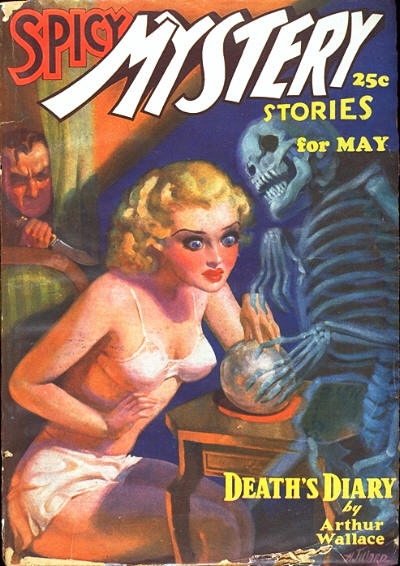
Spicy Southern Gothic

(No, not that spicy; this is a wholesome blog).


Is there a way to find the cure for this implanted in a pill

It's just the name upon the bottle, which determines if it will

Is the problem you're allergic to a well familiar name?

Do you have a problem with this one if the results are the same?


The White Stripes, "Girl, You Have no Faith in Medicine"


What care the Dead for Winter?
Themselves as easy freeze --
June Noon -- as January night --
As soon the South -- her Breeze --


Of Sycamore -- or Cinnamon --
Deposit in a Stone
And put a Stone to keep it Warm --
Give Spices -- unto Men --


Emily Dickinson (excerpt)


1. A psychiatrist close to me met a new patient to the clinic, a young man with a documented history of schizoaffective disorder, one day after his discharge from the hospital. Faxed hospital records describe the admission, but the patient was asked what, in his view, led to the hospitalization. "Too many spices," was the mumbled reply. Further questioning failed, alas, to illuminate this response ("spices" did not mean drugs, which, atypically, were not involved in the case).
Hearkening to a libertarian streak, the doctor's spontaneous response was, "Well, if the man prefers a bland diet, who am I to object? Are we as a society going to compel him to consume spicy food?" Perhaps the patient's figurative implication was that "the world is too much with us," and that we confront too much, too fast in this, perhaps literally, maddening culture. Perhaps this man was sane in an insane place.
Perhaps, but the hospital record suggested that this cute academic formulation wasn't the whole story, so prescriptions were duly written and the fellow shuffled back out into the extravagantly seasoned world of ours. Another reminder that psychiatry, warts and all (more every day if you watch the news), seems to be a necessary evil.

2. My commute goes between barren tobacco fields and crumbling barns, that rural part of old Dixie in which seeing the Stars and Bars openly blazoned is by no means beyond the pale (interestingly though, not only this state, but this county went for Obama, albeit very narrowly). I moved here from a slave-owning but Civil War border state, and it intrigues me to speculate on the subtle cultural differences between the two states, both a hundred and fifty years ago and now. I've been reading Doris Kearns Goodwin's Team of Rivals, which title has suffered overuse in recent weeks; the Lincoln bicentennial is just two months away.
At any rate, the other morning I saw an old black hearse sitting off in a field, with a small American flagpost affixed to the driver's side window. I wasn't sure whether this was some kind of political commentary, or someone's idea of a joke, or what. Maybe I should bring my camera next time; then again, maybe I should just keep on driving by.

Sunday, November 16, 2008

Miscellany


1. It has been a busy weekend, with company; it feels rude to absent oneself, for more than a little while at any rate, to blog.


2. Terrible storms here Friday night. After a loss of telephone, cable television, and Internet access, what would be the interval after which a normal person might grow restless and dysphoric?


3. I can't recall where I saw it recently (if it was on your website, my apologies), but the best phrase for the post-election letdown may be postpartisan depression. Of course, we're no more postpartisan now than we were at the "end of history" in the 1990's.


4. Probably my all-time favorite blog title is Languor Management (my life in two words); the site also has a terrific poem in its November 14 post.


5. An article noted by Arts & Letters Daily chronicles the haplessly isolated population of Greenland, apparently drawn by the inevitable pull of mineral and oil wealth. I had no idea it was such a hotbed (so to speak) of psychopathology; apparently 20% of teenaged girls there have attempted suicide. Psychiatry to the rescue! Very often the best professional advice is: get out while you still can. Mastering the obvious since 1848.


6. Holiday reading: Robert Bolano's 2666 is suddenly the literary event of the year, perhaps the decade (one review is here). Haven't read him; may have to now. (If anyone out there knows how to produce the tilda here, please let me know).